Revision Rhinoplasty in Istanbul: What to Know Before Surgery
Revision rhinoplasty in Istanbul: when to consider it, what makes it harder than primary surgery, and how Dr. Teoman Dogan approaches complex cases.
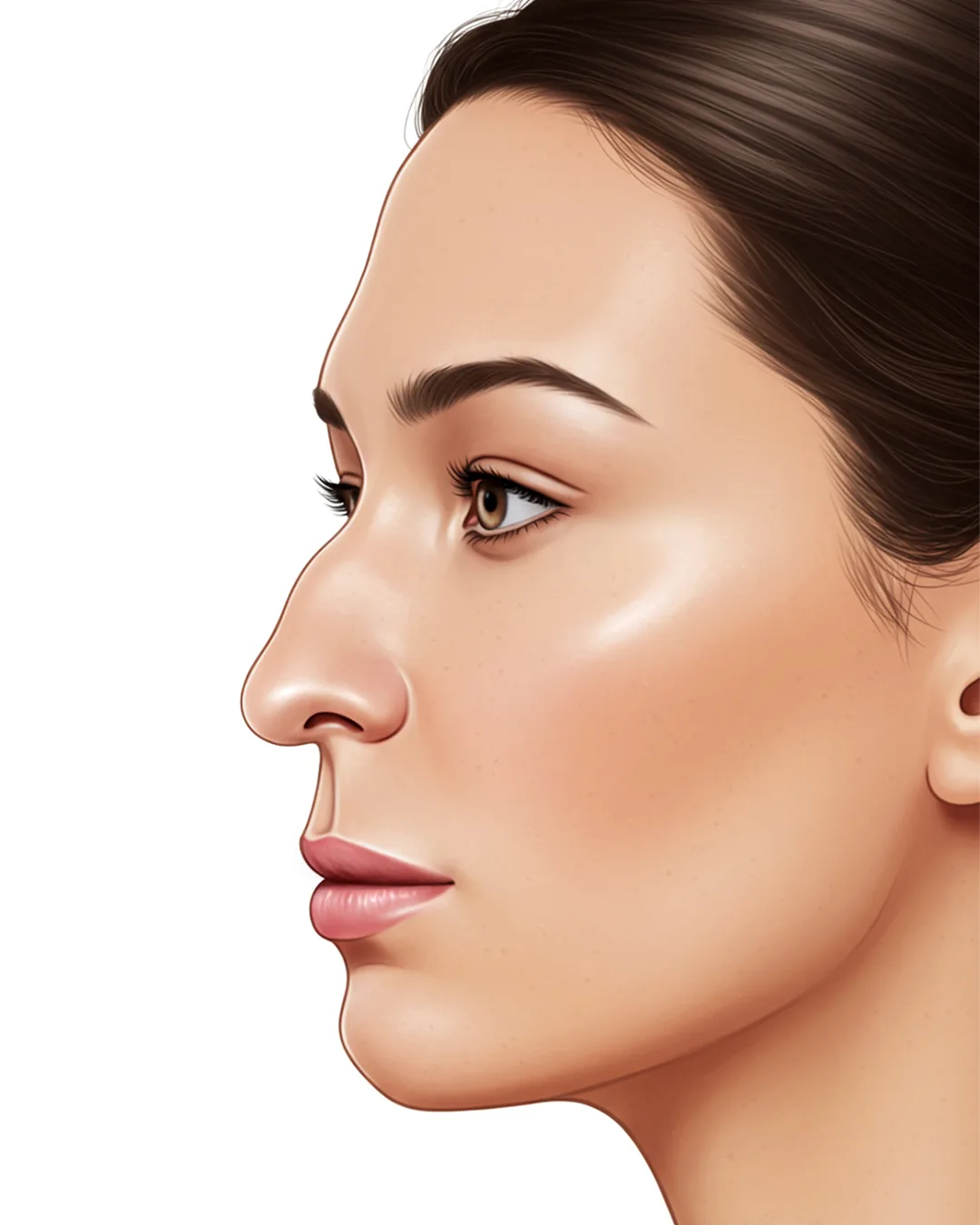
When Is Revision Rhinoplasty Necessary?
Revision rhinoplasty — also called secondary rhinoplasty — is performed when a previous nose surgery has produced results that are aesthetically unsatisfying or functionally problematic. Not every imperfect outcome requires revision. Some post-operative concerns resolve on their own as swelling subsides over 12 to 18 months.
However, revision becomes a genuine consideration when:
- Persistent asymmetry remains visible well beyond the healing period
- Breathing difficulties have developed or worsened after the first surgery
- Structural collapse — the nasal bridge or tip has lost support over time
- Unnatural appearance — an overly pinched tip, scooped bridge, or visible irregularities
- Incomplete correction — the original concern was not adequately addressed
If you are unhappy with a previous rhinoplasty, the first step is an honest evaluation with a surgeon experienced in revision work. Timing matters: most surgeons recommend waiting at least 12 months after the primary procedure before considering revision, allowing tissues to fully heal and the final shape to stabilize.
How Revision Rhinoplasty Differs from Primary Surgery
Revision rhinoplasty is widely regarded as one of the most challenging procedures in facial plastic surgery. The reasons are structural: a nose that has already been operated on presents altered anatomy, scar tissue, and often compromised cartilage.
Key differences include:
- Scar tissue — previous surgery creates internal scarring that obscures anatomical landmarks and makes dissection more delicate
- Reduced cartilage — if cartilage was removed during the first procedure, the surgeon has less native material to work with
- Weakened framework — over-resection of bone or cartilage can leave the nose structurally fragile
- Unpredictable healing — tissues that have been operated on before may heal less predictably the second time
- Longer operative time — revision cases typically require more time in the operating room than primary rhinoplasty
These factors demand a surgeon with deep anatomical knowledge, patience, and technical versatility. Revision rhinoplasty is not simply "redoing" a nose job — it is reconstructive problem-solving.
Common Issues That Lead to Revision
Patients seeking revision rhinoplasty in Istanbul commonly present with one or more of the following concerns:
- Pollybeak deformity — fullness above the nasal tip creating a parrot-beak profile
- Inverted-V deformity — visible collapse of the upper lateral cartilages
- Pinched nasal tip — excessive narrowing that looks unnatural and may restrict breathing
- Saddle nose — a depression along the nasal bridge from over-reduction
- Deviated nose — persistent or new crookedness after primary surgery
- Nasal valve collapse — internal narrowing causing significant breathing obstruction
Each of these problems requires a tailored surgical strategy. There is no single technique that addresses all revision scenarios.
Dr. Dogan's Approach to Revision Cases
Before committing to a second operation, it is worth reviewing the risks and complications of rhinoplasty and how to read a surgeon's before and after gallery.
The Consultation for Revision Patients
A revision consultation at Teo Clinic is more in-depth than a primary rhinoplasty consultation. Dr. Dogan needs to understand not only what you want to change, but what was done previously. Patients are encouraged to bring:
- Previous surgical records — operative notes from the first surgeon, if available
- Pre-operative photographs — images of the nose before the original surgery
- Timeline details — when the first surgery was performed and how healing progressed
- Current concerns — specific functional or aesthetic issues you want addressed
Dr. Dogan uses high-resolution imaging and a thorough physical examination to assess the internal nasal structure, skin thickness, remaining cartilage, and scar tissue. Based on this evaluation, he develops a realistic surgical plan and discusses what can and cannot be achieved.
Honesty during this stage is critical. Revision surgery can produce significant improvement, but expectations must be grounded in the anatomical realities of a previously operated nose.
Recovery After Revision Rhinoplasty
Recovery from revision rhinoplasty follows a similar general timeline to primary rhinoplasty, though some patients experience slightly longer swelling periods due to the complexity of the work.
Week 1: Rest with your head elevated. Internal splints remain in place. Mild to moderate discomfort is managed with prescribed medication. Bruising around the eyes is common.
Days 5-7: Return to Teo Clinic for splint removal. Initial results become visible, though significant swelling remains. Light walking is encouraged.
Weeks 2-4: Most visible bruising fades. Social activities can resume gradually. The nose will still feel stiff and swollen, which is entirely normal.
Months 2-6: Swelling continues to resolve progressively. The nasal shape becomes more refined as tissues settle around the reconstructed framework.
Months 9-18: Final results emerge. Revision cases often take longer than primary procedures to reach their definitive shape, particularly when grafting was involved.
International Patient Support
Teorhinoplasty
Dr. Dogan's signature rhinoplasty technique -- no cast, no tampons.
Frequently Asked Questions
How long should I wait after my first rhinoplasty before revision?
- At least 12 months, and often 18 months, to allow full healing and for the final shape to stabilize. Operating too early risks working on tissues that are still changing.
Is revision rhinoplasty more painful than primary?
- Most patients report similar levels of discomfort. Pain is well-managed with medication, and the experience during recovery is comparable to primary rhinoplasty.
Can revision rhinoplasty fix breathing problems caused by my first surgery?
- Yes. Functional correction is a central part of many revision cases. Dr. Dogan addresses structural issues like nasal valve collapse and septal deviation alongside aesthetic refinements.
Will I need cartilage grafting?
- Many revision cases require cartilage grafts to rebuild nasal structure. Dr. Dogan uses the patient's own cartilage — typically from the septum or, when needed, from the rib — to ensure biocompatibility and long-term stability.
What if I had rhinoplasty with a different surgeon?
- Dr. Dogan regularly performs revision surgery on patients whose primary rhinoplasty was done elsewhere. Previous surgical records are helpful but not always required — he can assess the current anatomy directly.