
Am I a Candidate for a Lip Lift? How Philtrum Length Is Measured
How surgeons measure the philtrum, what length indicates a lip lift rather than filler, and who is and is not a good candidate for the scarless technique.
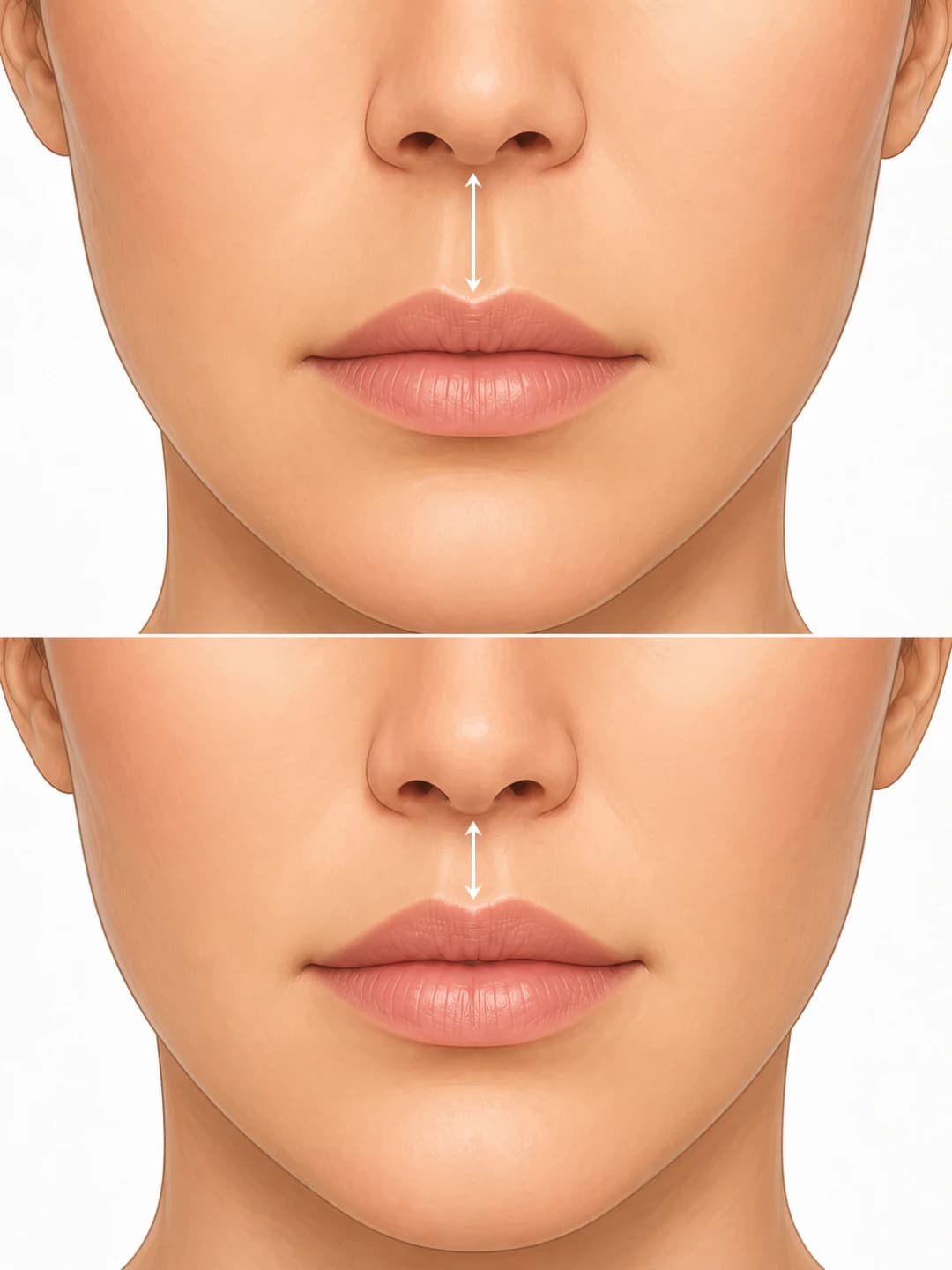
How do I know if I need a lip lift?
The measurement that matters is philtrum length — the distance from the base of the nose to the top edge of the upper lip, measured down the midline with your face relaxed. As a general reference, distances around 15 mm or less in women and 18 mm or less in men read as youthful. Meaningfully longer than that, and the upper lip begins to look thin and the mouth heavy, regardless of how much volume the lip itself has.
But the number is a starting point, not a verdict. What determines candidacy is how that distance relates to the rest of your face.
Why the philtrum lengthens
How the measurement is taken
The face must be relaxed, lips lightly together, not smiling and not pursed. The measurement runs from the subnasale — where the base of the columella meets the upper lip — to the vermilion border at the midline. It is recorded in millimetres.
Two other observations are taken at the same time:
- Tooth show at rest. How much of the upper incisors is visible with the mouth relaxed. In a youthful face a few millimetres show; when the philtrum lengthens, the teeth disappear entirely.
- Gum show on smiling. How much upper gum is exposed in a full smile. This one is a constraint rather than an indication — a lip lift increases gum show, so a patient who already shows a lot of gum is generally not a candidate.
Lip lift or lip filler?
This is the most common source of confusion, and the two are not interchangeable.
A lip lift changes proportion. It shortens the nose-to-lip distance and rolls more of the pink vermilion into view. The lip appears fuller because more of it is visible, not because anything has been added.
Filler changes volume. It makes the existing lip bigger. If the underlying problem is a long philtrum, adding volume produces a lip that is larger but still sits too far from the nose — and repeated filler over years tends to push the lip forward rather than upward, which reads as heavy rather than youthful.
If your own description of the problem is "my top lip has disappeared", that is a proportion complaint, and filler is the wrong tool for it.
Who tends to be a good candidate
- A philtrum that is long relative to the rest of the face
- Little or no upper tooth show at rest
- A modest gum show when smiling
- Good general health and a non-smoker, or willing to stop well before surgery
- An expectation framed around proportion and balance
Who tends not to be
- An already short philtrum
- Significant gingival show on smiling
- Active smoking, which impairs healing at the incision
- Wanting more volume rather than better proportion — filler may be more appropriate
- Very recent filler in the upper lip, which distorts the assessment
The scarless approach
A traditional bullhorn lip lift places an incision at the base of the nose. Well-executed, it heals discreetly; but it is an external scar in a highly visible location, and concern about it is the single most common reason patients hesitate.
Dr. Dogan's scarless technique achieves the same shortening without that incision, working beneath the skin surface. For patients who want the proportional change but not a visible line under the nose, this is what makes the procedure viable.
Final takeaway
Ask for your philtrum to be measured, and ask what the number means for your face specifically rather than against a general standard. A lip lift is a proportion operation, and the patients who are happiest with it are the ones who wanted proportion rather than volume in the first place.
Scarless Liplift
Enhanced lip aesthetics without visible scarring.
Frequently Asked Questions
How is philtrum length measured?
- It is measured from the base of the nose to the top edge of the upper lip's vermilion border, along the midline, with the face relaxed and the lips lightly together. It is measured in millimetres, and the assessment is made in relation to your other facial proportions rather than against a fixed target.
What philtrum length suggests a lip lift?
- As a broad guide, distances around 15 mm or less in women and 18 mm or less in men are considered youthful, and measurements meaningfully above that range are where a lip lift is often discussed. These are reference points, not thresholds — the decision rests on how the philtrum relates to your face as a whole.
Should I have a lip lift or lip filler?
- They solve different problems. A lip lift shortens the distance between nose and lip and increases how much pink lip is visible. Filler adds volume to the lip itself. If your complaint is that your upper lip has disappeared as the philtrum lengthened, filler will add bulk without restoring the proportion.
Does a scarless lip lift leave any scar?
- Dr. Dogan's scarless technique avoids the incision at the base of the nose that a traditional bullhorn lip lift requires, which is the scar patients most often want to avoid. Any surgical procedure involves incisions; the technique places them so that no visible external scar results.
Who is not a good candidate for a lip lift?
- Patients with an already short philtrum, those who show a large amount of upper gum when smiling, active smokers, and anyone whose expectation is more lip volume rather than better proportion. A short philtrum shortened further looks unbalanced and is difficult to reverse.
Related Treatments
Scarless Liplift
Enhanced lip aesthetics without visible scarring.