
What Is the Best Age for Rhinoplasty?
Why facial growth, not a birthday, sets the earliest age for nose surgery — and why there is no upper age limit, only a health assessment.
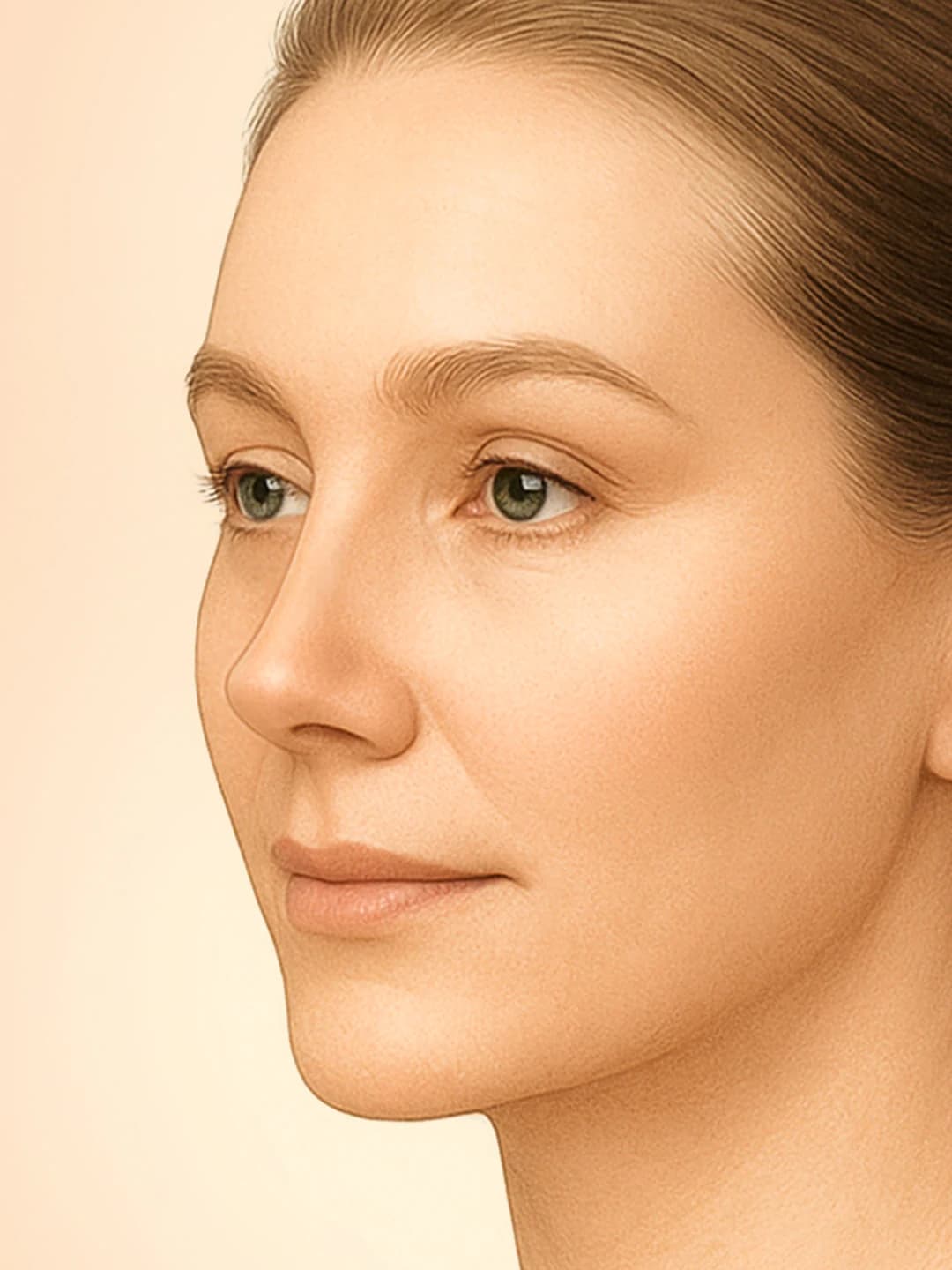
What is the best age for rhinoplasty?
There is no single best age. The meaningful threshold is skeletal, not chronological: nasal growth is generally complete around 15 to 16 in girls and 17 to 18 in boys, and cosmetic rhinoplasty is not normally performed before then. Above that point, the right age is whenever the concern is genuinely yours and your health supports surgery — there is no upper limit and no window that closes.
Growth, not birthdays
Late teens and early twenties
Once growth is complete, this is a common time for rhinoplasty, particularly where the concern has been present since adolescence.
Two things deserve attention at this stage. The first is skin thickness: younger patients often have thicker, more sebaceous nasal skin, which means the refined shape underneath takes longer to emerge as swelling resolves. Patience over 12 to 18 months matters more here than at any other age.
The second is motivation. A patient who has thought about this for years and can describe what bothers them in their own words is in a different position from one who has arrived at it recently or under someone else's influence. A good surgeon will explore this, and will decline where the answer is not convincing.
Thirties and forties
Frequently the most straightforward group. Facial anatomy is stable, skin quality is good, healing is efficient, and patients typically arrive with a clear and realistic idea of what they want.
This is also when breathing complaints tend to surface — sometimes a long-standing septal deviation that has slowly become more noticeable, sometimes obstruction following a rhinoplasty performed years earlier.
Fifties and beyond
Rhinoplasty in later life is safe and common, with two considerations that shape the plan.
Nasal skin thins with age, which means the framework beneath shows through more readily. Small irregularities that thicker skin would conceal become visible, so precision in the framework matters more. Thinner skin also has less capacity to retract, which affects how much reduction is advisable.
The tip also tends to droop over time as its supporting ligaments weaken. For many older patients, restoring tip support does more for the profile than reducing a dorsal hump — and it addresses a change they may have noticed as "my nose has got bigger", when in fact it has descended.
At this stage, patients frequently consider rhinoplasty alongside facial rejuvenation. Where both are appropriate, combining them means one anaesthetic and one recovery.
What actually determines suitability
Age is not on this list except at the lower bound:
- Completed nasal growth
- General health and fitness for general anaesthesia
- Non-smoking, or willing to stop well in advance
- Realistic and self-generated expectations
- Skin quality, assessed as a factor in planning rather than a barrier
- Stable weight and no untreated conditions affecting healing
Final takeaway
Wait until growth is complete. After that, the right time is when it is your decision, made for your reasons, with your health in good order. Rhinoplasty results do not become less durable with age — and a nose operated on at fifty ages the same way as one operated on at twenty-five.
Teorhinoplasty
Dr. Dogan's signature rhinoplasty technique -- no cast, no tampons.
Frequently Asked Questions
What is the minimum age for rhinoplasty?
- Nasal growth is generally complete around 15 to 16 in girls and 17 to 18 in boys, and cosmetic rhinoplasty is not normally performed before then. Operating on a nose that is still growing risks a result that changes as growth continues.
Is there an upper age limit for rhinoplasty?
- No. Suitability in later life is determined by general health, cardiovascular fitness for anaesthesia and healing capacity, not by age itself. Patients in their sixties and seventies undergo rhinoplasty safely when they are medically well.
Can a teenager have rhinoplasty for breathing problems?
- Functional surgery follows different reasoning from cosmetic surgery. Where a septal deviation causes significant obstruction, correction may be appropriate before growth is complete, with the surgical approach adapted to preserve the growth centres.
Does skin thickness change what is achievable at different ages?
- Yes. Younger skin is typically thicker and more elastic, which can mean tip definition takes longer to appear as swelling resolves. Older skin is thinner and drapes more readily over the framework, but has less capacity to retract.
Is it better to wait until my face has finished changing?
- For cosmetic rhinoplasty, yes — waiting until nasal growth is complete is the standard of care. Beyond that point there is no advantage in waiting further, and no age at which the result becomes less durable.