
Deviated Septum and Blocked Breathing: When Rhinoplasty Is Functional Surgery
How a deviated septum, nasal valve collapse and enlarged turbinates obstruct breathing, and why functional correction and aesthetic rhinoplasty are usually best done in one operation.
Is a deviated septum a cosmetic problem or a medical one?
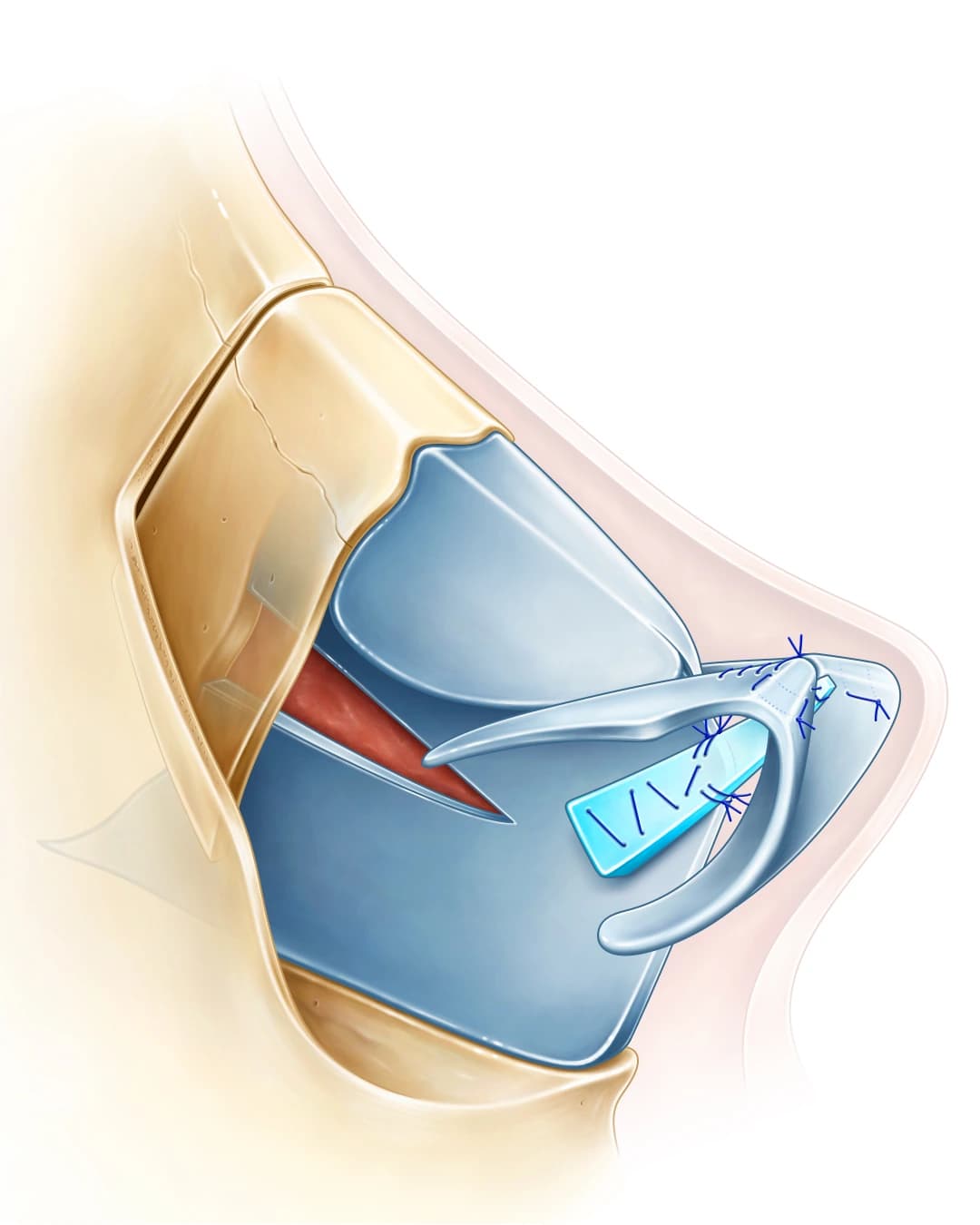
It is a medical one that frequently has a cosmetic dimension. The septum is the wall of cartilage and bone dividing the two nasal passages; when it deviates, airflow on one or both sides is obstructed. Because that same septum is the nose's central structural support, a significant deviation often also makes the nose look crooked. Correcting the breathing and correcting the appearance are therefore work on the same structure — which is why they are usually done together.
Obstruction is often more than the septum
The three common causes of nasal obstruction
Septal deviation
The most familiar cause. A deviated septum narrows one passage, and sometimes both if the deviation is S-shaped. It may be congenital or the result of trauma — often trauma the patient does not remember, since a childhood nasal injury can deflect growth without ever being diagnosed.
Nasal valve collapse
The internal nasal valve is the narrowest segment of the entire airway, so small changes there have a disproportionate effect. Where the supporting cartilage is weak, the sidewall draws inward on inspiration and the airway closes. Patients typically describe breathing that is adequate at rest but fails during exercise, and often report that adhesive nasal strips help — which is a useful diagnostic clue.
Turbinate hypertrophy
The turbinates are structures on the sidewall of each passage that warm and humidify air. Chronic allergy or irritation can enlarge them, narrowing the airway. Turbinate reduction is a modest addition to an operation but can make a substantial difference to how open the nose feels.
Why previous surgery sometimes causes obstruction
A significant share of patients presenting with breathing problems developed them after rhinoplasty. The mechanism is consistent: cartilage that was providing structural support was removed to achieve a shape change, the framework was left weaker than the airway needed, and over the following years the sidewalls gradually lost the ability to stay open under the negative pressure of inspiration.
This is the clinical argument for preservation-focused technique. Maintaining the nose's own support structures while changing its shape is not a stylistic preference — it is what keeps the airway open a decade later.
What a proper functional assessment includes
- Examination of both passages, at rest and during forced inspiration
- Assessment of the internal and external nasal valves
- Evaluation of turbinate size
- History of trauma, allergy, and any previous nasal surgery
- Discussion of how symptoms vary with exercise, sleep and position
If a consultation covers appearance only and never asks how you breathe, it is incomplete.
Combining functional and aesthetic correction
Because the same cartilage framework governs both airflow and outward shape, the two are addressed in one operation. Structural grafts — usually taken from the patient's own septal cartilage — can widen the valve, straighten a deviation, and support the dorsum, while the external contour is refined at the same time.
The recovery is a single recovery. The alternative, operating twice, means a second procedure through scarred tissue with less native cartilage available for grafting.
Final takeaway
If you cannot breathe well through your nose, say so at your consultation even if you came in about appearance. Functional and aesthetic nasal surgery are the same surgery performed on the same structures, and a result that looks good but breathes badly has not solved the problem.
Teorhinoplasty
Dr. Dogan's signature rhinoplasty technique -- no cast, no tampons.
Frequently Asked Questions
Can a deviated septum be corrected without changing how my nose looks?
- Yes. Septoplasty alone corrects the internal partition without altering the external shape. However, if the septal deviation is severe enough to twist the nose visibly, correcting the breathing without addressing the framework often leaves the outward crookedness unchanged.
Will insurance cover functional nasal surgery?
- Coverage varies by country and insurer, and typically applies only to the functional component when documented obstruction is present. Cosmetic changes performed at the same time are not usually covered. Check with your insurer before travelling, and ask the clinic what documentation they can provide.
Should I have septoplasty and rhinoplasty as separate operations?
- Rarely. The septum is the nose's central support, so aesthetic and functional work are performed on the same structures. Doing them separately means two anaesthetics, two recoveries, and a second operation through tissue that has already been scarred.
What is nasal valve collapse?
- The internal nasal valve is the narrowest part of the airway. If its supporting cartilage is weak — congenitally, from injury, or from cartilage removed during previous surgery — it can draw inward on inspiration and obstruct airflow, particularly during exercise. It is often missed when only the septum is examined.
Can rhinoplasty make breathing worse?
- It can, if too much structural cartilage is removed. Over-resection of the dorsum or the lower lateral cartilages weakens the support the airway depends on, and obstruction can appear years later. This is one of the main reasons preservation-focused technique matters.