
How Long Does Rhinoplasty Swelling Last? A Realistic Timeline
When rhinoplasty swelling peaks, when you look presentable, and why the tip is the last part to settle — with the factors that make the timeline longer or shorter.
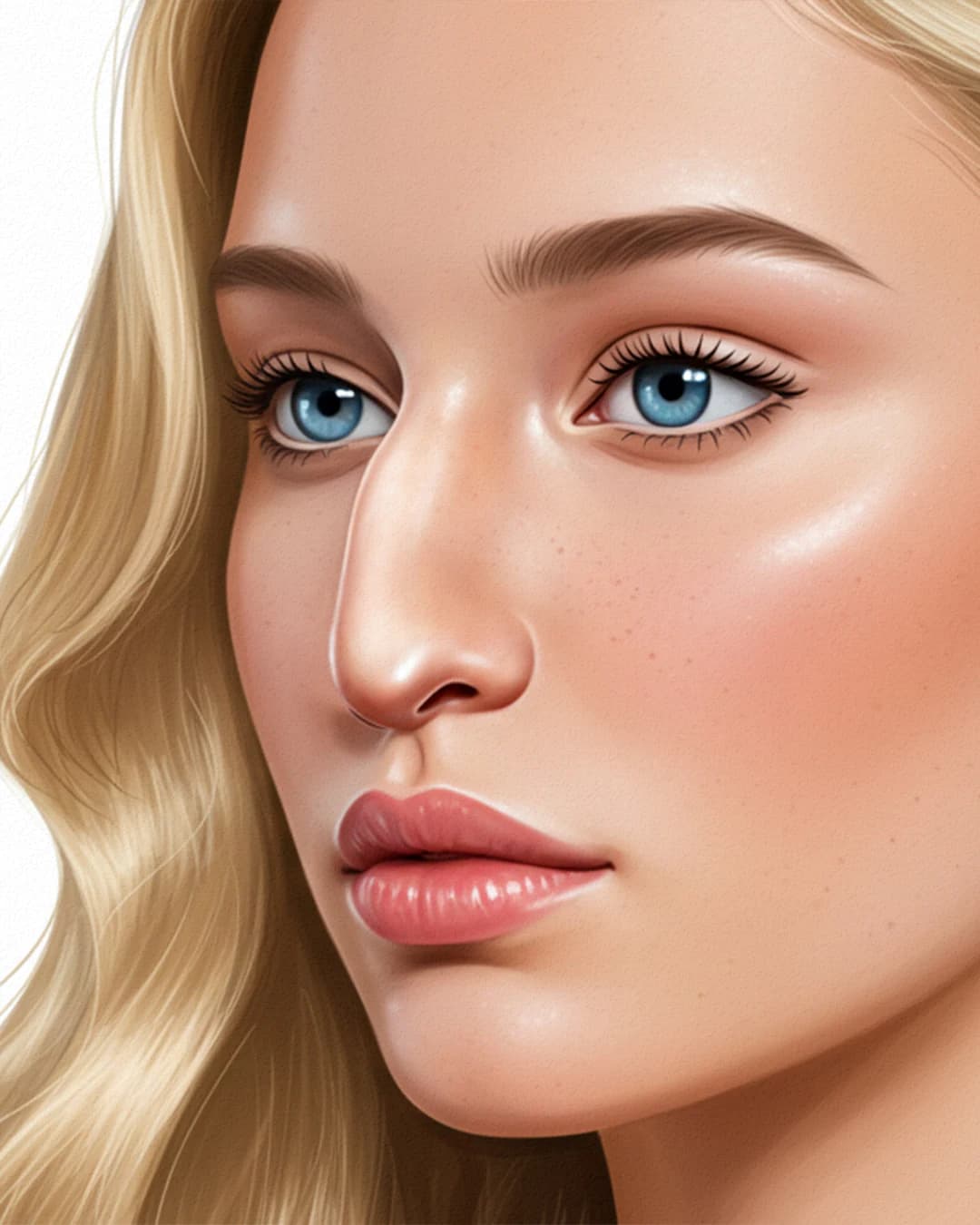
How long does rhinoplasty swelling actually last?
Most visible swelling resolves within two to three weeks — enough to return to work and be unremarkable to strangers. Refinement continues far longer: the nasal tip, which has the thickest skin and slowest drainage, typically keeps settling for a full 12 months, and up to 18 months for patients with thick skin or after revision surgery. The nose you see at three weeks is not the nose you will have at one year.
Swelling peaks after you start feeling better
The timeline, week by week
Days 1–2
The nose feels congested rather than painful. Swelling and bruising are present but still building. With the Teorhinoplasty approach there is no cast and no nasal packing, so walking and gentle outdoor activity are usually permitted from the day after surgery.
Days 3–4
Peak swelling, and typically the peak of any bruising around the eyes. This is the low point aesthetically. It resolves.
Days 5–7
Noticeable improvement. Bruising fades from purple toward yellow. Most patients have their follow-up appointment around day 6 or 7 and, once cleared, are able to fly home.
Weeks 2–3
The point at which most people feel comfortable in public. Someone who does not know you had surgery generally will not notice. You will still see swelling, particularly across the bridge and in the tip.
Weeks 4–8
The dorsum — the bridge — settles substantially. The profile begins to look like the planned result. The tip remains fuller than its final shape.
Months 3–6
Around 70 to 80 percent of swelling has resolved. Definition emerges progressively in the tip. This is the stage where patience is genuinely required, because change slows down while remaining incomplete.
Months 6–12
The remaining refinement, almost all of it in the tip. Final shape is generally reached by 12 months.
Months 12–18
Applies to thick skin and revision cases, where residual tip swelling can take the extra time.
What makes the timeline longer or shorter
Skin thickness is the largest single factor. Thick, sebaceous skin holds fluid longer and conceals underlying definition; thin skin reveals the framework sooner but also shows any irregularity more readily.
Primary versus revision. Revision surgery works through scar tissue with disrupted lymphatic drainage, and consistently swells longer.
Extent of the work. Osteotomies — controlled bone repositioning — produce more swelling than soft-tissue work alone.
Surgical approach. The closed approach preserves more lymphatic pathways and tends to settle faster early on.
Your own behaviour in the first fortnight: elevation, avoiding heat, avoiding strenuous exercise, restricting salt, and staying out of strong sun all measurably help.
What helps, and what does not
Helps:
- Sleeping with your head elevated for the first week
- Cold compresses on the cheeks — not directly on the nose — in the first 48 hours
- Reduced salt intake
- Sun protection, since UV exposure prolongs both swelling and discolouration
- Following the activity restrictions you were given, in full
Does not help, or actively harms:
- Massaging the nose without specific instruction to do so
- Applying heat
- Returning to the gym early
- Comparing yourself daily against photographs from the previous week
When swelling warrants a call
Contact the clinic if you have swelling that suddenly increases after having improved, swelling with fever, redness spreading across the skin, one-sided swelling that is markedly worse than the other, or pain that intensifies rather than fades. These are uncommon, but they are the ones to raise promptly rather than wait out.
Final takeaway
Judge the result at one year, not at one month. Rhinoplasty recovery is fast in the parts that are socially visible and slow in the part that determines the final shape — and almost every patient who is disappointed at week six is content by month twelve.
For the wider picture — activity restrictions, follow-up appointments and when it is safe to fly home — see our week-by-week rhinoplasty recovery guide.
Teorhinoplasty
Dr. Dogan's signature rhinoplasty technique -- no cast, no tampons.
Frequently Asked Questions
When does rhinoplasty swelling peak?
- Around days 3 to 4 after surgery. This surprises patients who feel better on day 2 and then look worse on day 4 — it is the normal course, not a complication.
When will I look normal to other people?
- Most patients are presentable to people who do not know they had surgery at around two to three weeks. Residual swelling is still present but is generally only obvious to you and to anyone comparing against a photograph.
Why does the nasal tip stay swollen the longest?
- The tip has the thickest skin and the least efficient lymphatic drainage of the whole nose, so fluid clears from it more slowly. Tip swelling typically continues to resolve for 12 months, and up to 18 months in patients with thick skin or after revision surgery.
Does the closed approach reduce swelling?
- In the early weeks, generally yes. A closed approach does not divide the columella or lift the entire skin envelope, so lymphatic channels are less disrupted and early swelling tends to settle sooner. By around 12 months the difference between approaches narrows considerably.
What can I do to reduce swelling faster?
- Keep your head elevated for the first week, avoid strenuous activity for the period your surgeon specifies, do not apply heat to the nose, limit salt, and stay out of strong sun. Do not massage the nose unless your surgeon has specifically instructed it.