Ethnic Rhinoplasty in Istanbul: Preserving Identity with Natural Results
How Dr. Teoman Dogan approaches ethnic rhinoplasty in Istanbul: respecting cultural identity while achieving balanced, natural nose reshaping.
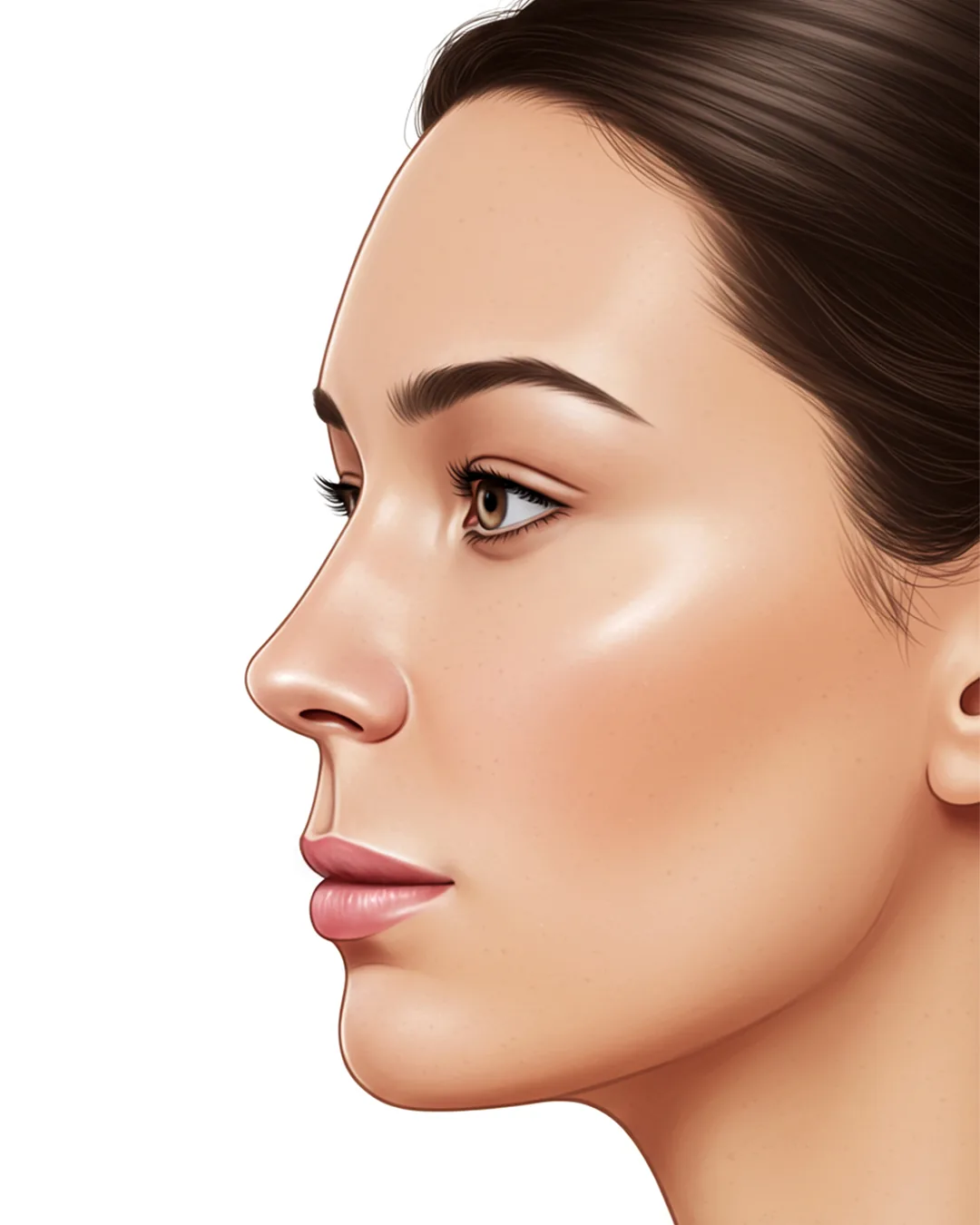
What Is Ethnic Rhinoplasty?
Ethnic rhinoplasty refers to nose reshaping surgery that is specifically tailored to patients of non-European backgrounds — including Middle Eastern, African, South Asian, East Asian, and Hispanic heritage. The term recognizes that nasal anatomy varies significantly across ethnic groups, and that a one-size-fits-all surgical approach produces results that can look out of place on certain facial structures.
The goal of ethnic rhinoplasty is not to erase heritage. It is to achieve aesthetic improvements that harmonize with the patient's natural facial features, skin characteristics, and cultural identity. This requires a surgeon who understands the anatomical diversity of nasal structures and who approaches each case with sensitivity to what the patient wants to preserve as much as what they want to change.
Why a Specialized Approach Matters
Beyond One Standard of Beauty
Conventional rhinoplasty techniques were largely developed around European nasal anatomy — thinner skin, prominent dorsal projection, and firm cartilage. Applying these same techniques to structurally different noses can lead to poor outcomes:
- Thicker nasal skin does not contract the same way after cartilage reduction, potentially resulting in amorphous tip definition
- Softer or shorter cartilage may not respond to traditional suture techniques designed for firmer frameworks
- Wider alar bases require specific strategies that differ from standard narrowing approaches
- Lower dorsal profiles may benefit from augmentation rather than the reduction commonly performed in European rhinoplasty
A specialized approach ensures that surgical techniques are matched to the individual's anatomy, not imposed from a template.
Common Anatomical Considerations
While every patient is unique, certain anatomical themes recur across different ethnic backgrounds:
Middle Eastern noses often feature a prominent dorsal hump, a drooping nasal tip, and moderately thick skin. Patients frequently seek profile refinement while maintaining a nose that looks natural within their facial context.
African and Afro-Caribbean noses tend to have wider alar bases, a broader nasal tip, thicker skin, and less cartilage projection. Augmentation of the bridge and structural tip refinement are common goals.
South Asian noses frequently present with a wide tip, moderate skin thickness, and a low dorsal profile. Patients often request tip refinement and subtle bridge augmentation.
East Asian noses commonly feature a low nasal bridge, minimal tip projection, and relatively thick skin. Dorsal augmentation and tip definition are typical objectives.
These are generalizations — individual variation within any group is enormous. Dr. Dogan evaluates each patient based on their specific anatomy, not assumptions based on background.
Dr. Dogan's Philosophy on Ethnic Rhinoplasty
Dr. Dogan's approach to ethnic rhinoplasty rests on several principles:
- Listen first — understanding what the patient values about their appearance is as important as understanding what they want to change
- Preserve identity — surgical changes should complement the patient's ethnic features, not erase them
- Structural integrity — the nose must function well and maintain its shape long-term, which requires respecting the underlying anatomy
- Customized technique — no two ethnic rhinoplasties are the same; the surgical plan is built from the patient's anatomy and goals, not from a standard protocol
- Realistic imaging — Dr. Dogan uses detailed before-and-after imaging during consultations to align expectations with achievable results
This philosophy reflects the core of Teorhinoplasty: preservation-based surgery that works with the body's natural architecture.
Technique Highlights
Depending on the patient's anatomy and goals, ethnic rhinoplasty at Teo Clinic may involve one or more of the following techniques:
- Cartilage grafting — using the patient's own septal or rib cartilage to build structural support, augment the bridge, or refine the tip
- Tip suturing — reshaping the nasal tip cartilages with precision suture techniques rather than aggressive resection
- Alar base modification — carefully narrowing wide nostrils while maintaining natural nostril shape and avoiding visible scarring
- Dorsal augmentation — adding height to a low nasal bridge using cartilage grafts for a permanent, natural-feeling result
- Subperichondrial dissection — Dr. Dogan's preservation technique that maintains the nasal ligament framework during reshaping
Each technique is selected and adapted based on the individual case. The emphasis is always on building and refining, not removing.
When reviewing a surgeon's gallery, look for patients whose starting anatomy resembles your own — the guide to reading before and after photos explains what else to check.
Setting Realistic Expectations
Ethnic rhinoplasty can achieve meaningful, visible improvements — but it operates within the boundaries of the patient's unique anatomy. During the consultation, Dr. Dogan discusses:
- What changes are realistically achievable given skin thickness, cartilage quality, and facial proportions
- How the nose will look in the context of the whole face, not in isolation
- The expected healing timeline, which may be longer for patients with thicker skin (tip refinement can take 12 to 24 months to fully emerge)
- Any functional improvements that can be addressed simultaneously, such as septal deviation or breathing difficulties
Patients who come with clear goals and an openness to expert guidance tend to achieve the most satisfying results.
Consulting from Abroad
Teorhinoplasty
Dr. Dogan's signature rhinoplasty technique -- no cast, no tampons.
Frequently Asked Questions
Will ethnic rhinoplasty change my ethnic appearance?
- The goal is refinement, not transformation. Dr. Dogan works to enhance your features while preserving the characteristics that reflect your heritage. Many patients specifically request a result that looks like a better version of their natural nose.
Is the recovery different from standard rhinoplasty?
- The recovery timeline is similar — about 7 to 10 days for initial healing, with final results emerging over 12 to 18 months. Patients with thicker skin may notice that tip swelling takes longer to fully resolve.
Do you use implants for dorsal augmentation?
- Dr. Dogan prefers autologous cartilage (from the patient's own body) over synthetic implants. This avoids risks of implant migration, infection, or extrusion, and produces a result that feels natural.
Can ethnic rhinoplasty fix breathing problems?
- Yes. Functional issues like deviated septum and nasal valve insufficiency are addressed during the same procedure when present.
How do I know if a surgeon is experienced with ethnic rhinoplasty?
- Look for a surgeon who has operated on a diverse patient base, who shows before-and-after examples across different ethnicities, and who discusses preservation and identity as part of their approach — not just technical capability.