Teo Midface Lift in Istanbul: Natural Facial Rejuvenation Explained
How the Teo Midface Lift differs from a traditional facelift, who benefits most, and why structural rejuvenation outlasts volume-based approaches.
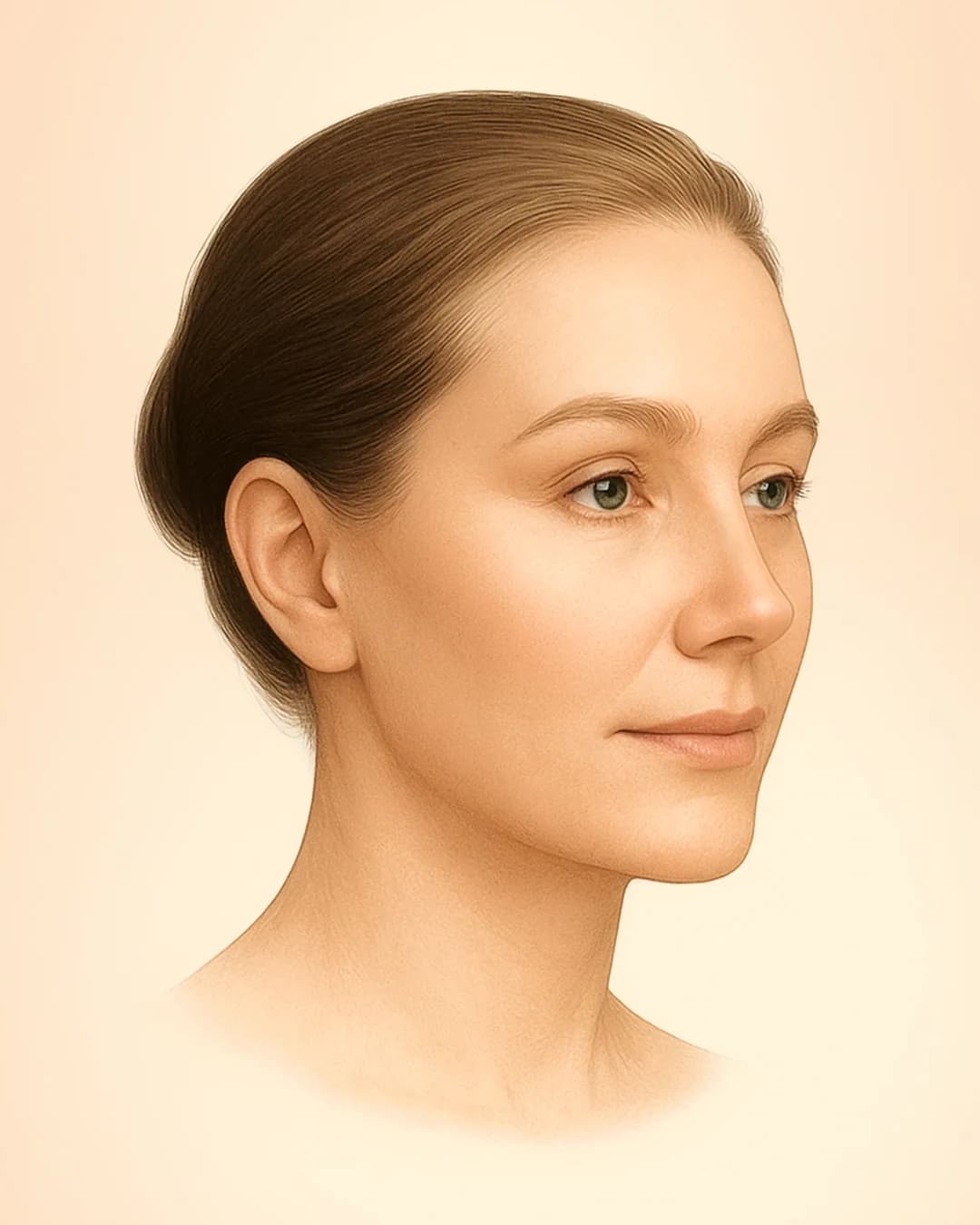
What Is a Midface Lift?
A midface lift targets the area between the lower eyelids and the mouth — the central zone of the face that is often the first to show signs of aging. As the soft tissues in this region descend over time, patients develop deepened nasolabial folds, hollowing beneath the eyes, and a flattened cheek contour.
Unlike a traditional facelift, which primarily addresses the jawline and neck, a midface lift repositions the deeper structures of the cheek back to their youthful position. The result is restored volume in the cheeks, a smoother transition from the lower eyelid to the cheek, and a naturally refreshed appearance.
The midface is anatomically complex, with delicate structures including the infraorbital nerve, the cheek fat pads, and the muscles of facial expression. Achieving natural results in this area requires precise surgical technique and a thorough understanding of facial anatomy.
How the Teo Midface Lift Differs
The Teo Midface Lift Approach
The Teo Midface Lift differs from conventional approaches in several important ways:
- Vertical vector lifting — tissues are repositioned upward along their natural descent path, avoiding the lateral pull that can create a "windswept" look
- Deep plane technique — the lift addresses the SMAS and deeper tissue layers, not just skin, providing longer-lasting structural support
- Preservation of facial expression — careful dissection around motor nerves maintains natural movement and avoids a frozen or mask-like appearance
- Minimal visible scarring — incisions are placed in natural creases and concealed locations, typically along the hairline and lower eyelid
- Structural philosophy — rather than relying on volume addition, the procedure restores the face's own tissue architecture
This approach reflects Dr. Dogan's broader surgical philosophy: working with the body's natural anatomy rather than against it.
Who Benefits Most from a Midface Lift?
The ideal candidate for a Teo Midface Lift typically presents with:
- Descended cheeks — the malar fat pad has dropped, creating flatness or hollowing in the midface
- Deep nasolabial folds — prominent creases running from the nose to the corners of the mouth
- Under-eye hollowing — a visible trough or shadow beneath the lower eyelids
- Early to moderate aging — patients in their 40s to 60s who want rejuvenation without a full facelift
- Prior filler fatigue — patients who have relied on dermal fillers for volume but want a more permanent, structural solution
A midface lift is not appropriate for everyone. Patients whose primary concerns are neck laxity or jowling may benefit more from a lower facelift or full face and neck lift. During the consultation, Dr. Dogan evaluates the entire face to recommend the procedure — or combination of procedures — that will produce the most harmonious result.
The Surgical Process
The Teo Midface Lift is performed under general anesthesia at the American Hospital in Istanbul. The procedure typically takes 2 to 3 hours, depending on the extent of correction needed.
- Anesthesia and preparation — the patient is placed under general anesthesia and the surgical area is prepared
- Incision placement — small incisions are made in the temporal hairline and, when necessary, along the lower eyelid crease
- Deep tissue access — the surgeon accesses the sub-SMAS plane to reach the descended fat pads and supporting ligaments
- Vertical repositioning — the malar fat pad and midface tissues are elevated vertically and secured in their anatomically youthful position
- Structural fixation — tissues are anchored with internal sutures to provide lasting support without relying on skin tension
- Closure — incisions are meticulously closed with fine sutures to minimize scarring
For how a targeted midface lift relates to full facelift techniques, see deep plane vs SMAS facelift.
Midface Lift vs. Dermal Fillers
Many patients first encounter midface rejuvenation through dermal fillers. Fillers can be effective for adding temporary volume, but they work fundamentally differently from a midface lift.
| Midface Lift | Dermal Fillers | |
|---|---|---|
| Approach | Repositions descended tissue | Adds synthetic volume |
| Duration | Long-lasting (years) | Temporary (6-18 months) |
| Natural appearance | Restores anatomy | Can look overfilled over time |
| Structural correction | Yes | No |
| Downtime | 2-3 weeks | Minimal |
| Cumulative cost | One-time investment | Ongoing expense |
For patients who have been maintaining their appearance with fillers for years, a midface lift can offer a reset — achieving a more natural, lasting result while eliminating the cycle of repeated injections.
Recovery Timeline
Week 1: Moderate swelling and bruising, particularly around the cheeks and lower eyelids. Cold compresses and head elevation help manage these. Prescription pain medication keeps discomfort minimal.
Weeks 2-3: Bruising fades significantly. Swelling begins to subside. Most patients feel comfortable appearing in social settings with light makeup by the end of week two.
Month 1-2: Residual swelling continues to resolve. The lifted cheek contour becomes more defined. Normal activities, including light exercise, can resume.
Months 3-6: Final results take shape as deep tissues settle into their new position. The face looks rested, refreshed, and naturally youthful.
International Patients
Teo Midface Lift
Targeted rejuvenation of the mid-face region.
Frequently Asked Questions
How long do midface lift results last?
- Results typically last 7 to 10 years or longer. Because the procedure repositions deep structures rather than simply tightening skin, the outcomes are durable and age gracefully over time.
Can a midface lift be combined with other procedures?
- Yes. It is commonly combined with lower blepharoplasty (eyelid surgery), a lower facelift, or rhinoplasty for comprehensive facial rejuvenation. Dr. Dogan evaluates which combinations are appropriate during the consultation.
Will I look "pulled" or unnatural?
- The vertical lifting vector used in the Teo Midface Lift specifically avoids the lateral tension that creates an unnatural appearance. The goal is a refreshed look, not a visibly operated one.
When can I fly home after surgery?
- Most international patients are cleared to fly 10 to 14 days after surgery, following their post-operative examination at the clinic.
What is the difference between a midface lift and a full facelift?
- A midface lift focuses on the cheek and under-eye area, while a full facelift addresses the lower face, jawline, and neck as well. Some patients benefit from one or the other; others benefit from both performed together.
Related Treatments
Teo Midface Lift
Targeted rejuvenation of the mid-face region.