
Deep Plane vs SMAS Facelift: How the Techniques Differ
What separates a deep plane facelift from SMAS techniques, which anatomy each addresses, and why the marketing gap is wider than the surgical one.
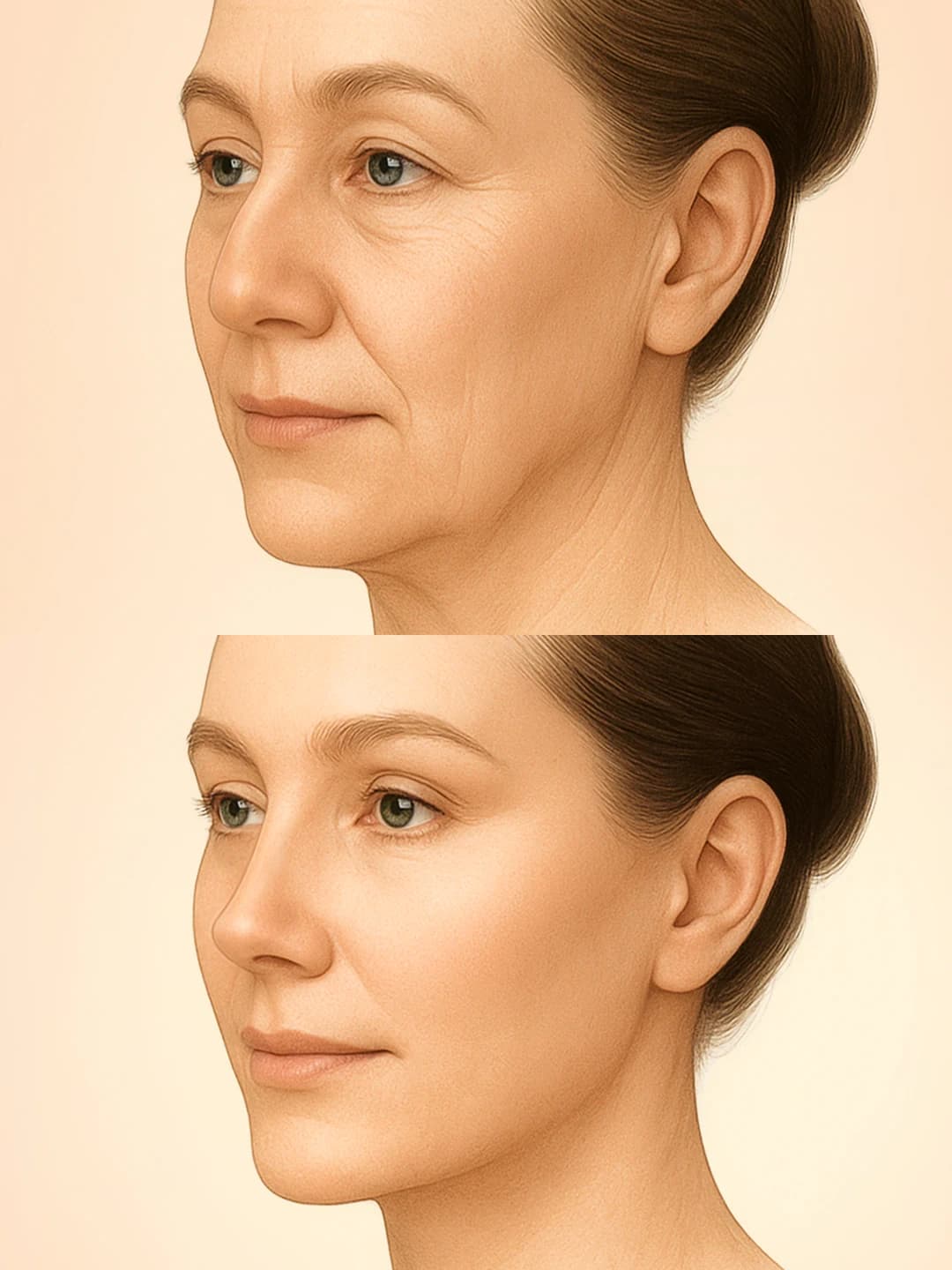
What is the difference between a deep plane and a SMAS facelift?
Both operations reposition the SMAS — the fibromuscular layer beneath the skin that carries facial ageing. They differ in how. A SMAS facelift elevates skin and SMAS as separate layers and tightens each. A deep plane facelift releases the facial retaining ligaments and moves skin and SMAS together as a single composite unit, which reaches the midface more directly.
The distinction is real, but the marketing gap between the two is considerably wider than the surgical one.
What the SMAS actually is
Why skin-only facelifts were abandoned
Early facelift surgery lifted the skin and pulled it tight. The results looked corrected briefly, then relapsed, because skin is elastic and the descended structure beneath it had not moved. Pulling harder to compensate produced the swept, tight appearance that gave facelifts their reputation.
Every modern technique, deep plane and SMAS alike, exists to move the deeper layer so that the skin can be redraped without tension. That shared principle matters more than the differences between them.
How a SMAS facelift works
The surgeon raises a skin flap, then addresses the SMAS as a separate layer beneath it. Several variants exist:
- SMAS plication — the layer is folded and sutured onto itself without cutting it. Quicker, less dissection, correspondingly less lift.
- SMASectomy — a strip of SMAS is excised and the edges closed, shortening the layer.
- SMAS flap elevation — the layer is raised as a flap, repositioned along a chosen vector, and fixed.
These techniques are well established, versatile, and effective for laxity concentrated at the jawline and upper neck. Their limitation is the midface: because the retaining ligaments are not fully released, elevation of the cheek is less direct.
How a deep plane facelift works
The dissection passes beneath the SMAS rather than above it, releasing the retaining ligaments that tether the layer in place — principally the zygomatic and masseteric ligaments. Skin and SMAS then move as one composite flap.
The consequences:
- More midface elevation. Releasing the ligaments allows the cheek fat pad to be repositioned upward, which addresses flattened cheeks and deep nasolabial folds more effectively.
- No independent skin tension. Because the composite unit carries the lift, the skin is redraped rather than pulled, which is what preserves natural movement.
- Longer-held results. Tension sits on released deep tissue rather than on elastic skin.
- A more demanding dissection. The plane runs closer to branches of the facial nerve and requires precise anatomical knowledge.
Which anatomy suits which technique
The honest answer is that it depends on where your ageing has actually occurred:
| Presentation | Generally better addressed by |
|---|---|
| Midface descent, flattened cheeks, deep nasolabial folds | Deep plane |
| Laxity mainly at the jawline and upper neck | SMAS techniques, often with a neck lift |
| Early, limited midface change | A targeted midface lift rather than a full facelift |
| Heavy skin laxity with good underlying volume | Either, depending on vector and skin quality |
| Significant volume loss alongside descent | Any of the above, combined with fat transfer |
This is why the question "which technique is best" has no general answer. The relevant question is which layer, in your face, has moved — and that requires an examination. The distinction between a full facelift and a more targeted lift is covered in facelift vs midface lift.
What the technique does not determine
Several things that patients attribute to the choice of technique are actually determined by other factors:
- Scar placement and quality. A function of incision design and closure, not of the plane of dissection.
- The neck. Significant platysmal banding needs specific neck work regardless of which facelift is performed above it.
- Volume. Neither technique restores lost fat. If volume loss is a major component, fat transfer is a separate decision.
- Recovery length. Broadly comparable between the two. The facelift recovery timeline applies to both.
A note on how these techniques are marketed
"Deep plane" has become a marketing term as much as a surgical one, and is sometimes applied loosely to operations that do not involve a true sub-SMAS composite dissection with ligament release. If the technique matters to you, ask directly: which ligaments will be released, and will the skin and SMAS be moved as one unit or separately? A surgeon performing a genuine deep plane facelift will answer without hesitation.
Equally, a well-executed SMAS facelift by a surgeon who performs it routinely will produce a better outcome than a deep plane attempted by someone who rarely does one. Technique choice matters; operator experience with that technique matters more.
Final takeaway
Deep plane and SMAS facelifts share the same principle — reposition the layer that has descended and redrape the skin without tension. The deep plane approach releases the retaining ligaments and moves skin and SMAS together, giving more midface elevation and generally longer-lasting results in the right candidate. SMAS techniques remain effective and appropriate where laxity sits at the jawline and neck. Choose by examination and by your surgeon's experience with the specific technique, not by which name appears more often in marketing.
Teo Midface Lift
Targeted rejuvenation of the mid-face region.
Frequently Asked Questions
What is the difference between a deep plane and a SMAS facelift?
- Both reposition the SMAS layer beneath the skin; they differ in how. A SMAS facelift lifts the skin and the SMAS as separate layers, while a deep plane technique releases the retaining ligaments and moves skin and SMAS together as one composite unit. The deep plane approach reaches the midface more directly.
Is a deep plane facelift better than a SMAS facelift?
- Not universally. The deep plane approach generally gives more midface elevation and a longer-lasting result in the right candidate, but it is technically demanding and unnecessary for patients whose main concern is the jawline and neck. The better operation is the one matched to your anatomy, performed by a surgeon who does it regularly.
Does a deep plane facelift last longer?
- Typically yes. Because tension is carried by the released deep layer rather than by the skin, results tend to hold longer than skin-tension techniques, commonly cited in the region of ten to fifteen years. Ageing continues afterwards from the new baseline, so longevity means slower relapse rather than a permanent freeze.
Is a deep plane facelift riskier?
- The dissection runs closer to branches of the facial nerve, so it demands precise anatomical knowledge, but in experienced hands the complication rate is comparable to other facelift techniques. Surgeon experience with the specific technique matters far more to your risk than the choice of technique itself.
How do I know which facelift technique I need?
- It depends on where your ageing has occurred. Midface descent, flattened cheeks and deep nasolabial folds point toward a deep plane approach; laxity concentrated at the jawline and upper neck is often well served by SMAS techniques. This should be decided by examination, not by which technique you read about first.
Related Treatments
Teo Midface Lift
Targeted rejuvenation of the mid-face region.