
Male Rhinoplasty in Istanbul: What Is Different for Men
How male rhinoplasty differs anatomically and aesthetically from female rhinoplasty, what a masculine result requires, and where feminised noses come from.
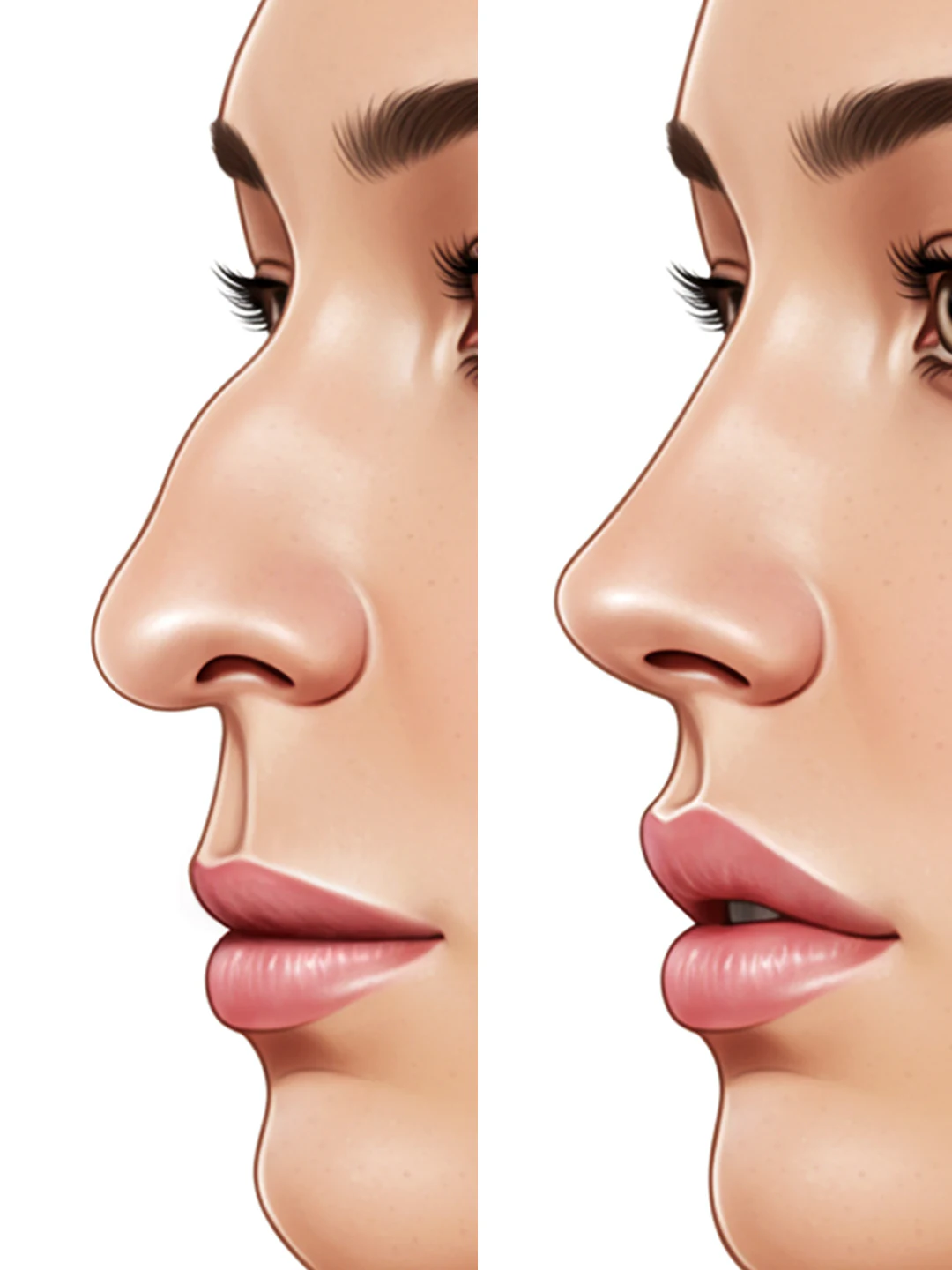
What makes male rhinoplasty different?
The operation is technically the same; the aesthetic targets are not. A masculine result preserves a straight dorsal line rather than the slight concavity often sought in women, keeps tip rotation lower, and maintains more width and projection. Male skin is also typically thicker and the cartilage stronger, which alters both the surgical plan and how long the result takes to appear.
Applying female aesthetic targets to a male nose is the single most common reason a male rhinoplasty result looks wrong, and it is a planning error rather than a technical one.
One question worth asking at consultation
The anatomical differences that drive the plan
Thicker skin. The male nasal soft-tissue envelope is generally thicker, particularly over the tip. Thick skin conceals underlying definition, so refinements that would show clearly on thin skin may not show at all. It also holds swelling for longer, which is why the twelve-month timeline matters more for men than the six-month one.
Stronger cartilage. Male septal and lateral cartilage is typically thicker and more rigid. This makes it more resistant to reshaping but also more useful as grafting material, which is an advantage in complex cases and in revision surgery.
Larger overall dimensions. A male nose is generally longer, wider at the base and more projected. The surgical question is not how to make it small but how to make it proportionate — and reducing it to dimensions the face cannot support is what produces the feminised look men most want to avoid.
Higher incidence of trauma. Men present with old fractures far more often than women. A nose broken years earlier in sport frequently has a deviated septum and a genuine airway problem alongside the visible deviation, which makes the correction functional as well as aesthetic.
The aesthetic targets for a masculine result
Three variables determine whether a nose reads as masculine:
The dorsal line. Women often suit a dorsum with a slight scoop. Men do not. A straight profile line, or one with only the faintest concavity, is what preserves a masculine appearance. Over-reduction into a visible scoop is the most recognisable marker of a feminised male nose, and it is difficult to correct because the tissue has been removed.
Tip rotation. The angle between the columella and the upper lip should sit lower in men — broadly in the region of ninety to ninety-five degrees, against the more rotated angle often targeted in women. An over-rotated tip produces an upturned nose that looks conspicuously surgical on a male face.
Width and projection. The base and bridge should stay proportionate to a wider male face. Narrowing the nose to female dimensions makes it look pinched rather than refined, and if the narrowing compromises the internal valve it costs airway function as well.
Why men often want less change, not more
Male patients frequently present asking for the smallest change that resolves a specific concern — a hump, a deviation, an obstruction — rather than a comprehensive reshaping. This suits a conservative surgical philosophy well.
It also aligns with preservation techniques, which lower a dorsal hump by repositioning the bridge rather than shaving it off. For a male nose, where the goal is often to remove a hump while keeping the profile strong, preserving the dorsal line as an intact unit is well matched to the aesthetic target.
Recovery considerations specific to men
- Swelling lasts longer. Thicker skin holds oedema. Expect the tip to keep refining for a full year rather than six months. The general swelling timeline applies, but sits at the longer end of every range.
- Beard growth and shaving. Shaving around the upper lip and cheeks is usually possible within days, but avoid pressure on the nose and check with your surgeon before any electric razor use near the bridge.
- Contact sport. The most important restriction, and the one most often broken. Bone needs a minimum of three months before impact risk is acceptable, and longer for anything involving a real chance of a direct blow. Re-fracturing a healing nose undoes the operation entirely.
- Glasses. Sustained pressure on the bridge should be avoided for four to six weeks. This is a practical problem for men who wear glasses daily and worth planning around in advance.
- Return to the gym. Walking early, light cardio at three to four weeks, and full training at six weeks with clearance — but weights that involve straining or breath-holding raise blood pressure sharply and should wait.
Choosing a surgeon for male rhinoplasty
Ask to see results on male patients specifically, with a starting anatomy comparable to yours. A gallery composed largely of female noses tells you little about how a surgeon handles a thick-skinned, strongly projected male nose. The general principles in the surgeon selection checklist all apply, with that one addition.
Final takeaway
Male rhinoplasty is not a different operation but a different set of targets: a straighter dorsum, lower tip rotation, and proportions that respect a wider face. Most poor male results come from applying female aesthetic goals rather than from technical failure. Thicker skin means a longer wait for definition, so patience through the first year matters more than it does for most female patients. Choose a surgeon who can articulate what a masculine result requires and show you that they have produced one.
Teorhinoplasty
Dr. Dogan's signature rhinoplasty technique -- no cast, no tampons.
Frequently Asked Questions
How is male rhinoplasty different from female rhinoplasty?
- The technique is the same; the aesthetic targets are not. A masculine result keeps a straight or near-straight dorsal line rather than a slight scoop, holds tip rotation lower, and preserves more nasal width and projection. Men also tend to have thicker skin and stronger cartilage, which changes both the surgical plan and the healing timeline.
Will rhinoplasty make my face look feminine?
- Only if the wrong targets are used. Feminisation comes from over-rotating the tip, over-reducing the dorsum into a scoop, and narrowing the nose beyond what the face supports. A surgeon who plans to male proportions produces a straighter, stronger nose that reads as refined rather than softened.
Do men take longer to recover from rhinoplasty?
- The functional recovery is similar, but visible swelling often persists longer because male skin is typically thicker and holds oedema for longer. Definition in the tip can take a full twelve months to appear. Men are also more likely to need a longer restriction on contact sport and heavy lifting.
Can rhinoplasty fix a nose broken playing sport?
- Yes, and this is one of the most common reasons men present. An old fracture frequently leaves both a visible deviation and a genuine airway obstruction, so the correction is usually functional as well as aesthetic. Long-healed fractures are more complex than fresh ones because the bone has set in its displaced position.
Is rhinoplasty common for men?
- Rhinoplasty is consistently among the most requested procedures by men worldwide, and the proportion of male patients has risen steadily. Most men present with a combination of a dorsal hump, a post-traumatic deviation, or breathing obstruction, rather than with a purely cosmetic request.