Facelift in Istanbul: Candidacy and Surgical Planning
Learn who is a strong candidate for facelift surgery in Istanbul, how modern planning works, and what creates balanced, natural facial rejuvenation.
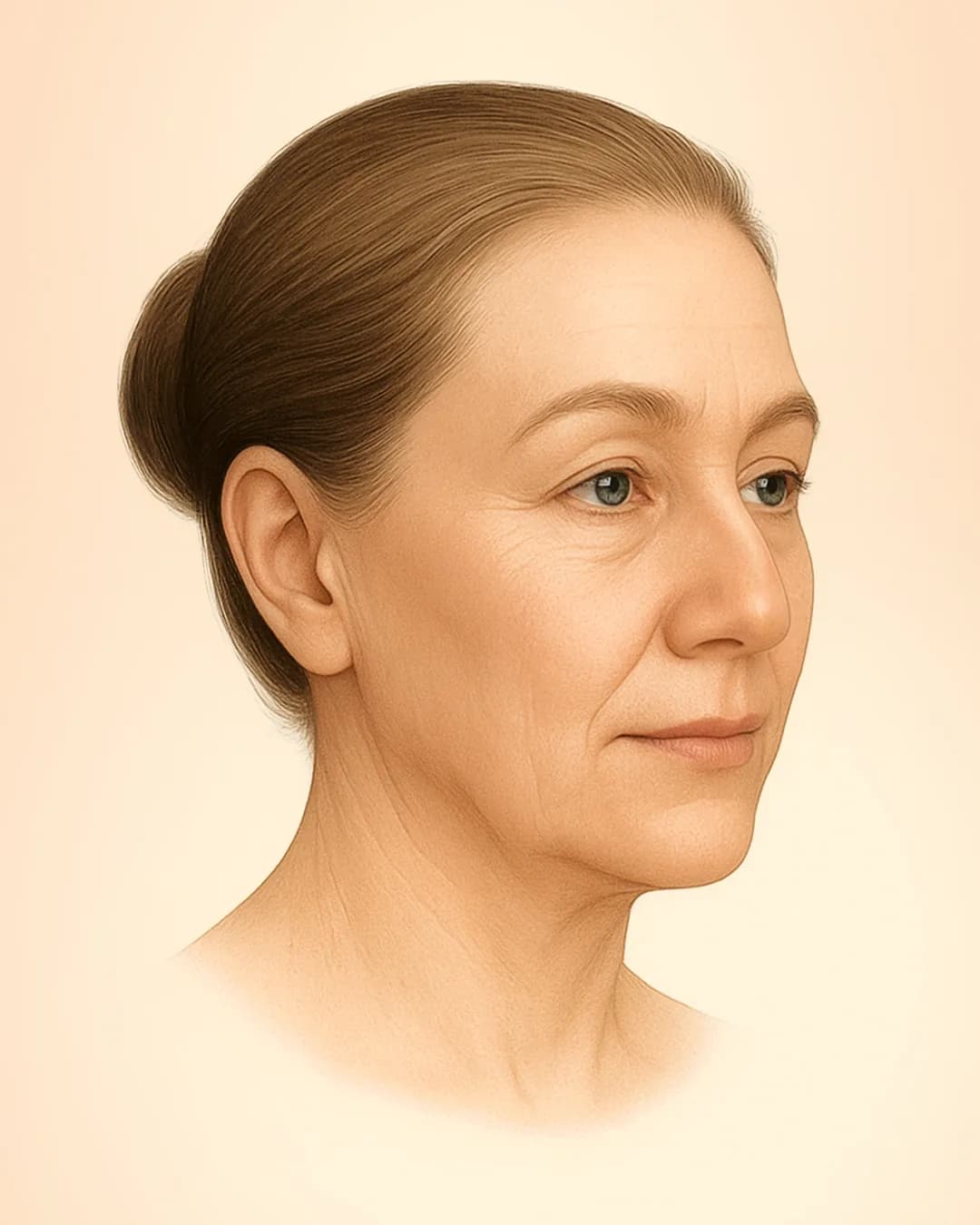
Am I a candidate for a facelift?
Candidacy is decided by how your tissue has aged, not by your age. The patients who benefit most show midface descent, deepening nasolabial folds and skin laxity that no longer responds to non-surgical treatment — combined with good general health and realistic expectations. Most are in their forties to sixties, but that range describes a pattern, not a rule.
The more important shift in modern practice is what the operation is actually doing. The goal today is structural repositioning, not skin pulling, and that change is what improved both naturalness and longevity.
Why skin-only tightening was abandoned
Signs you may be a strong candidate
You may be well suited to facelift surgery if you notice:
- Midface volume descent and deepening nasolabial folds
- Loss of definition where the cheek transitions into the lower face
- Flattening of the cheeks or hollowing beneath the eyes
- Skin laxity that has not responded to non-surgical treatment
- A wish for something longer-lasting than fillers or energy devices
Good overall health, realistic expectations and a willingness to follow recovery guidance matter as much as the anatomy. The last of those is underrated — the recovery timeline asks for six weeks of discipline, and results reflect whether it was given.
Deciding scope before deciding technique
Two separate questions get collapsed into one. The first is scope: how much of the face needs addressing. The second is technique: which tissue plane is used to do it.
| If your ageing is concentrated in… | The scope is usually… |
|---|---|
| Cheeks, under-eye hollows, nasolabial folds | A midface lift |
| Jawline and lower face as well | A full facelift |
| Neck laxity or platysmal banding | Neck work, in addition |
| Volume loss more than descent | Fat transfer, possibly alone |
Scope comes first. Facelift vs midface lift works through that decision, and deep plane vs SMAS covers the technical layer once scope is settled.
How planning works
Planning generally starts with facial vector analysis, an assessment of skin quality, and a review of where volume has been lost as distinct from where tissue has descended. Those are different processes with different remedies, and conflating them is the most common planning error.
A tailored plan may include:
- Midface lift focus where descent is central rather than along the jawline
- Fat transfer in selected zones, where volume loss accompanies descent
- Combination with eyelid surgery, a temporal lift or a lip lift where the upper or perioral face is part of the picture
The objective is harmony across the whole face rather than isolated tightening of one region. A midface that has been lifted convincingly while the eyelids and perioral area are left untouched can read as inconsistent rather than refreshed.
What the operation involves
The Teo Midface Lift is performed under general anaesthesia at the American Hospital in Istanbul, takes two to three hours, and includes an overnight stay for post-operative monitoring. Deep tissues are repositioned to their youthful position rather than the skin being pulled taut — which is the mechanism behind a refreshed rather than a surgical appearance.
Questions worth asking at consultation
Before choosing a surgeon, ask:
- Which facial layers will be repositioned, and along which vector?
- Where will the incisions sit, and how are the scars managed afterwards?
- What is the realistic timeline for social recovery, not the best case?
- Which parts of the plan are necessary for my goals and which are optional?
- What will this operation not change?
Detailed answers let you compare surgical thinking rather than marketing. A surgeon who is specific about vectors, layers and limits is telling you something useful; one who answers only in outcomes is not. The safety checklist covers credential verification alongside these clinical questions.
What a facelift will not do
- It will not restore lost volume. Repositioning and volumising are separate; fat transfer is a separate decision.
- It will not resurface skin. Texture, pigmentation and fine lines need different treatment.
- It will not fully correct the neck where there is significant laxity or banding — that needs specific neck work.
- It will not stop ageing. It resets the baseline; ageing continues from there.
Key takeaway
The best outcomes come from individualised planning rather than a named technique: establish where your ageing has actually occurred, settle scope before technique, and address volume loss and tissue descent as the separate problems they are. Choose a surgeon who explains strategy clearly, states the limits plainly, and prioritises natural movement and expression over the amount of lift achieved.
Teo Midface Lift
Targeted rejuvenation of the mid-face region.
Frequently Asked Questions
What age is right for a facelift?
- Candidacy is driven by tissue behaviour rather than age. Most patients who benefit are between their forties and sixties, but a patient of fifty with good skin elasticity and early midface descent is often a better candidate than one of sixty-five with heavy sun damage. The examination decides, not the birth date.
Will a facelift make me look pulled or windswept?
- Not when the deeper structural layer is repositioned rather than the skin pulled tight. The windswept look is the signature of skin-only tightening. The Teo Midface Lift repositions deep tissues to their youthful position and redrapes the skin without tension, which is what preserves natural expression.
What is the difference between a midface lift and a full facelift?
- A midface lift specifically targets the central face — cheeks, under-eye area and nasolabial folds. A full facelift addresses the lower face and jawline as well. Which one you need depends on where your ageing has actually occurred, and should be decided by examination rather than by which term you searched for.
Can a facelift be combined with other procedures?
- Yes, frequently. A midface lift is often combined with eyelid surgery, a temporal lift or Teorhinoplasty for comprehensive rejuvenation. For international patients, combining also means one anaesthesia event and one recovery period rather than two separate trips.
Should I have fillers or a facelift?
- Fillers restore lost volume; a facelift repositions descended tissue. They solve different problems and are not interchangeable. If your concern is a hollow midface, filler may be enough; if the tissue has fallen and the jawline has blurred, adding volume will make the face heavier rather than younger.
Related Treatments
Teo Midface Lift
Targeted rejuvenation of the mid-face region.