Rhinoplasty in Istanbul: Cost, Technique, and Natural Results
A practical guide to rhinoplasty in Istanbul, including cost factors, modern surgical technique, and what creates natural-looking outcomes.
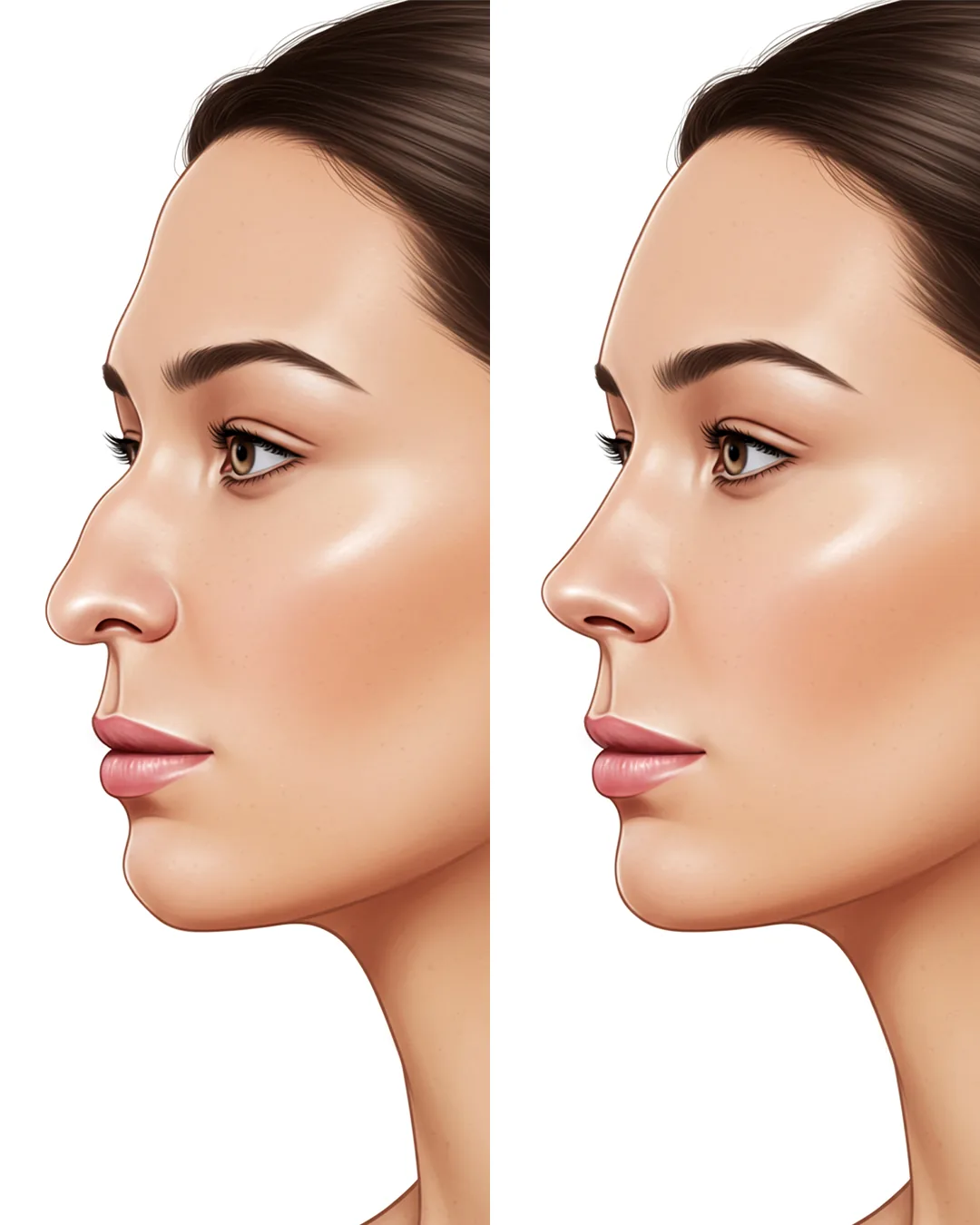
What should I know before booking rhinoplasty in Istanbul?
Three things decide your outcome, and price is not one of them: whether the surgeon assesses breathing alongside appearance, whether the technique preserves the nose's own support structures, and whether the quote states exactly what it covers. Istanbul offers experienced facial surgeons and accredited private hospitals at a genuine cost advantage — but that advantage only means something once those three checks are satisfied.
For most patients the goal is not a dramatic change. It is a nose that fits their face, breathes properly, and still looks right in fifteen years.
A quote far below the local norm is a warning
What actually affects the cost
There is no single fixed price, because the operations differ. Cost generally reflects:
- Primary versus revision surgery. Revision cases are longer and technically harder.
- Functional complexity. Septal deviation, turbinate work and valve correction add operative time.
- Technique and operating time. Time under anaesthesia is a real cost.
- Hospital standards and the anaesthesia team. An accredited hospital and a dedicated anaesthetist are line items worth paying for.
- Follow-up and aftercare included. Where the clinic's duty ends is a pricing decision as much as a clinical one.
A proper consultation breaks this down so two quotes can be compared like for like. What a rhinoplasty quote should include covers the itemisation in detail, and how Istanbul compares with the UK and US puts the total in context including flights and time off work.
Technique matters more than trends
Most clinic marketing leads with before-and-after photographs. A more useful signal is technique philosophy — specifically, whether the approach removes structure or preserves and repositions it.
Teorhinoplasty is a closed technique using a complete subperichondrial dissection, which maintains the nose's structural integrity rather than reducing it. Practically, it requires no cast, no tampon and no external stitches to be removed, the operation typically takes 1 to 1.5 hours, and patients are discharged the same day. Preservation rhinoplasty explains the underlying reasoning, and closed vs open approaches covers the access decision.
When comparing surgeons, ask how they plan to:
- Protect nasal support and long-term function
- Balance the dorsal profile against tip definition
- Minimise the risk of late collapse
- Personalise the shape to your face rather than applying a template
What makes a result look natural
Two things, mostly. The first is proportion — a nose that suits one face is conspicuous on another, which is why templates fail. The second is preserved support: noses that have been aggressively reduced tend to look acceptable at six months and pinched at six years, because the structures holding the shape were removed rather than repositioned.
Natural is therefore partly a question about time. The right test of a technique is not how the nose looks at three months but how it holds a decade later.
Function is not a separate concern
Breathing should be assessed in the same operation, not deferred. Septal deviation, turbinate hypertrophy and nasal valve collapse are all best addressed while the nose is already open, and correcting them later means a second operation on a nose that has already healed once.
Confirm explicitly whether functional work is included in your quote or priced separately — deviated septum and functional rhinoplasty covers what that assessment involves.
The recovery you should plan for
| Stage | What to expect |
|---|---|
| Day 1 | Walking and outdoor activity permitted |
| Days 3–4 | Swelling peaks, then subsides |
| Days 6–7 | Follow-up; clearance to fly home |
| Within 1 week | Most patients return to work |
| Week 2 onwards | Heavier exercise can resume |
| Months 1–6 | Residual swelling resolves; final shape settles |
The week-by-week recovery guide goes through each stage, and how long swelling lasts covers the long tail.
How to improve your own result
The parts within your control matter more than patients expect:
- Stop smoking and nicotine products well before surgery, not just after.
- Share your full medical history and any previous nasal procedures or injuries.
- Plan realistic recovery time, especially around international travel.
- Keep every follow-up, including the remote ones after you fly home.
- Protect the nose from impact during healing, and be patient with the result.
Final takeaway
Focus on surgical planning quality, functional outcomes and structured follow-up. Ask how your support structures will be preserved, confirm that breathing is assessed as part of the same operation, and require a quote with a stated scope. Cost matters — it is often why patients look at Istanbul in the first place — but a natural result and comfortable long-term breathing are what you actually take home.
Teorhinoplasty
Dr. Dogan's signature rhinoplasty technique -- no cast, no tampons.
Frequently Asked Questions
Why is rhinoplasty less expensive in Istanbul than in Western Europe?
- Lower operating costs, favourable exchange rates and a high concentration of specialist surgeons, rather than lower standards. The saving reflects the local cost base. It should not be confused with a discount on surgical quality, and a quote far below the Istanbul norm is a warning rather than a bargain.
What makes a rhinoplasty result look natural?
- Proportion to the rest of the face and preservation of the nose's own support structures. A nose that suits one face looks conspicuous on another, so a technique that repositions rather than removes cartilage tends to age better and avoid the pinched, over-operated appearance that follows aggressive reduction.
Does rhinoplasty in Istanbul include correcting my breathing?
- It should be assessed as part of the same operation, but confirm it explicitly in your quote. Septal deviation, turbinate hypertrophy and nasal valve collapse are best addressed during the aesthetic procedure rather than as a separate operation later. Ask whether functional work is included or priced separately.
How do I compare two rhinoplasty quotes from Istanbul clinics?
- List what each covers line by line: named operating surgeon, hospital, anaesthesia team, grafting materials and number of follow-ups. Two quotes for the same operation usually differ because they cover different things, not because one clinic is generous. A quote without a scope is not information.
How long before I see the final result of my rhinoplasty?
- The nose looks presentable within one to two weeks and settles into its final contour over one to six months as residual swelling resolves, with the tip holding swelling longest. Revision decisions should not be made early — give the result the full settling period before judging it.