
Rhinoplasty Risks and Complications: An Honest Guide
The real risks of rhinoplasty, how common each one is, which are temporary and which are not, and the questions that expose how a surgeon handles them.
What are the real risks of rhinoplasty?
Rhinoplasty is a safe operation in experienced hands, but it is not a risk-free one. The realistic risks fall into three groups: temporary effects that resolve on their own, functional problems affecting breathing, and aesthetic outcomes that do not match what the patient wanted. Serious medical complications are uncommon; disappointment is not.
That framing matters, because most patients arrive worried about the wrong things. The question that deserves the most attention is not "could something go badly wrong in theatre" but "what happens if the result is not what I hoped for, and how does this surgeon handle that."
A surgeon who lists no risks is a risk
Temporary effects that are expected, not complications
These are part of normal healing, though they are frequently mistaken for something having gone wrong:
- Swelling. Substantial for the first two weeks, then gradual for months. The tip is the last area to settle, sometimes taking a full year. The realistic swelling timeline is the single most useful thing to understand before surgery.
- Bruising. Usually around the eyes, resolving over ten to fourteen days. Technique affects how much appears.
- Numbness. Reduced sensation in the tip and upper lip is normal while sensory nerves recover. It resolves in nearly all patients.
- Congestion. Internal swelling blocks the airway for several weeks. Breathing often feels worse before it feels better, which alarms patients who expected immediate improvement.
- Temporary asymmetry. Swelling rarely resolves evenly. Asymmetry in the early weeks is not a result.
None of these require intervention. All of them generate anxious messages to surgeons, which is why a clinic's follow-up system matters as much as its surgery.
Functional risks
The functional risks are the ones with lasting consequences, and they are largely determined by surgical philosophy.
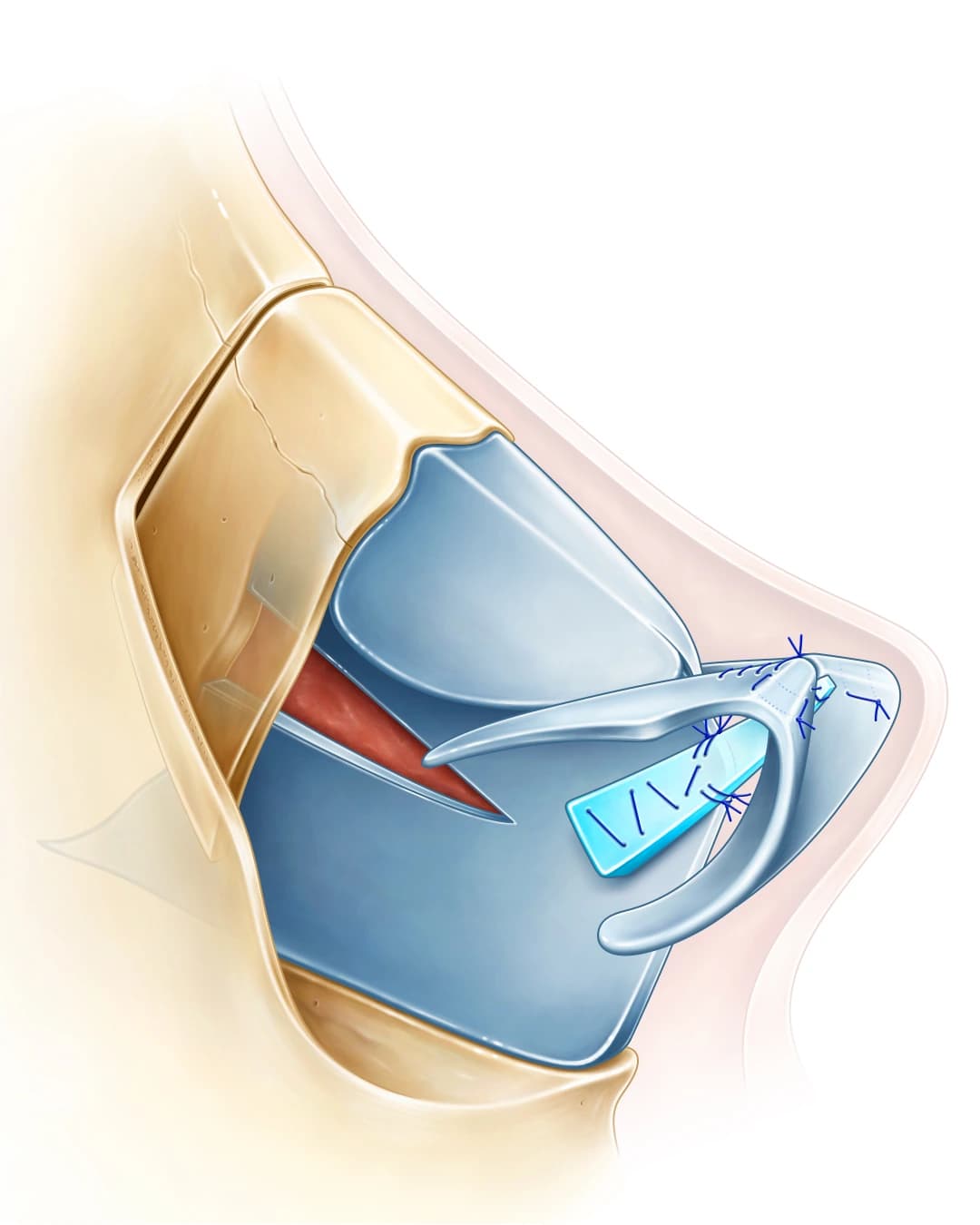
Nasal valve collapse. The internal nasal valve is the narrowest part of the airway. Over-resection of the upper lateral cartilages or aggressive narrowing of the bridge can weaken it, producing a nose that looks acceptable but collapses on inspiration. This can appear months or years after surgery, long after the patient assumed healing was complete.
Persistent obstruction. If a deviated septum or turbinate hypertrophy is not addressed during the operation, the airway problem that existed beforehand will still be there afterwards. This is not a complication so much as an omission, and it is avoidable by assessing function at consultation rather than treating the nose as a purely aesthetic structure.
Loss of structural support over time. A nose built by removing structure depends on scar tissue to hold its shape. Scar tissue contracts. This is the mechanism behind the pinched tip and the polly beak that appear years after an otherwise satisfactory early result, and it is the central argument for preservation techniques that keep the native framework intact.
Aesthetic risks
The most common reason patients seek revision is not that something failed medically, but that the result is not what they wanted.
Contributing factors, in rough order of frequency:
- Expectation mismatch. The patient and surgeon were picturing different outcomes. This is a communication failure and is largely preventable at consultation.
- Over-reduction. More was removed than the face could carry, producing a nose that reads as operated. Difficult to correct, because tissue is easier to remove than to replace.
- Under-correction. A conservative result that does not achieve enough change. Easier to revise than over-reduction, and generally the safer error.
- Irregularities. Small contour deviations that become visible as swelling resolves. Some settle; some do not.
- Asymmetry. Faces are asymmetrical to begin with, and a nose can only be made as symmetrical as the face it sits on.
Rare but serious complications
For completeness, and because patients search for them: significant bleeding requiring intervention, infection, septal perforation, and anaesthetic complications all occur but are uncommon in an accredited hospital with a dedicated anaesthesia team. The setting is a substantial part of the risk profile — which is why where your surgery takes place deserves as much scrutiny as who performs it. This is covered in the surgeon selection checklist.
What raises your individual risk
Some factors are yours to control:
- Smoking and nicotine, which impair healing significantly
- Undisclosed medical history or medications
- Previous nasal surgery or trauma, which makes tissue less predictable
- Poor compliance with post-operative instructions
- Unrealistic expectations, which convert a technically good result into a disappointing one
Others are not: skin thickness, cartilage quality, and the degree of pre-existing asymmetry all affect what is surgically achievable. A surgeon should tell you at consultation which of these apply to you, and thick skin in particular should be discussed openly because it lengthens the swelling timeline and limits definition.
Questions that reveal how risk is actually managed
- What is your revision rate, and what is your revision policy?
- What specifically would you do if I am unhappy at twelve months?
- Which structures in my nose are you planning to remove, and which to reposition?
- Who administers the anaesthesia, and what is the hospital's accreditation?
- What are the specific limitations of my anatomy?
The last question is the most diagnostic. Every nose has constraints. A surgeon who names yours is planning for your face; a surgeon who does not is selling a procedure.
Final takeaway
The serious medical risks of rhinoplasty are real but uncommon. The likely risks are prolonged swelling, a functional shortfall if breathing was not properly assessed, and an aesthetic result that does not match expectation. All three are reduced by the same things: an experienced surgeon, an accredited hospital, an honest consultation that names your anatomical limits, and a follow-up system that stays engaged after you fly home. If you are already considering a second operation, the revision rhinoplasty guide covers what changes the second time round.
Teorhinoplasty
Dr. Dogan's signature rhinoplasty technique -- no cast, no tampons.
Frequently Asked Questions
What is the most common complication after rhinoplasty?
- Prolonged swelling and a result that does not match the patient's expectation are far more common than any surgical emergency. Serious complications such as significant bleeding or infection are uncommon in accredited hospital settings. The realistic risk for most patients is an aesthetic or functional shortfall rather than a medical crisis.
How often does rhinoplasty need revision surgery?
- Published series generally report revision rates in the range of five to fifteen per cent for primary rhinoplasty, varying with case complexity and how revision is defined. Rates are higher for revision cases than for primary ones. A surgeon who claims never to revise is either very new or not counting.
Can rhinoplasty make my breathing worse?
- It can, if support structures are over-resected. Aggressive removal of cartilage weakens the nasal valve and can cause collapse on inspiration months or years later. This is the main argument for preservation techniques, which reposition structure rather than remove it, and for assessing breathing before any aesthetic planning.
Is numbness after rhinoplasty permanent?
- Almost never. Reduced sensation in the tip and upper lip is expected for weeks to months while small sensory nerves recover, and the great majority of patients regain normal feeling within a year. Permanent numbness is rare and usually confined to a small area.
How do I reduce my own risk of complications?
- Stop smoking and nicotine well before surgery, disclose your full medical history and every previous nasal procedure, follow the pre-operative medication instructions exactly, and keep every follow-up appointment. Choosing an experienced surgeon operating in an accredited hospital removes more risk than anything you can do afterwards.